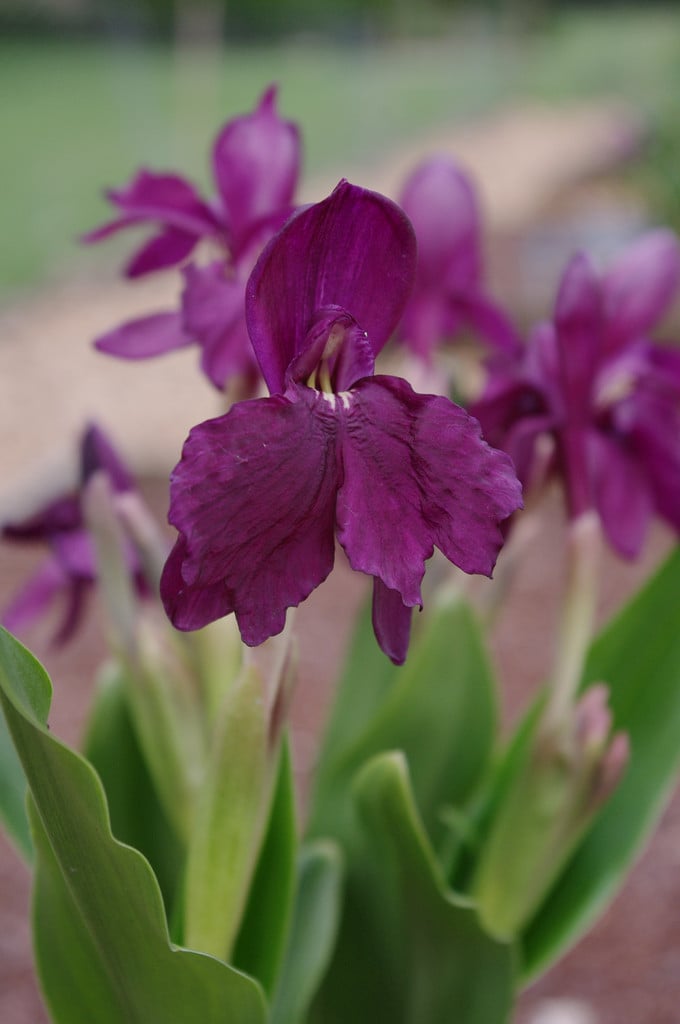
Roscoea wardii

RHS Plant Profile
Ward's roscoea
Ward's roscoea RHS
Award of Garden Merit
Herbaceous Perennial

A perennial with upright, yellow-green, stem-clasping foliage. Terminal clusters of flowers appear in mid- to late summer, opening very dark purple, becoming paler and redder with age

Position

Partial shade

Soil Types

Clay, Loam

Max Height

0.1-0.5 metres

Max Spread

0.1-0.5 metres

Size

Time to Maturity
2–5 years
Max Spread
0.1-0.5 metres
Max Height
0.1-0.5 metres

Growing Conditions

Clay Loam
Moisture
Moist but well–drained
pH
Acid or Alkaline or Neutral

Position

Partial shade
Aspect
North–facing or West–facing or East–facing
Exposure
Sheltered
Hardiness
H5

Colour & Scent

Season Stem Flower Foliage Fruit
Spring
Summer
Autumn
Winter

Botanical Details

Family
Zingiberaceae
Native to GB/Ireland
No
Foliage
Deciduous
Habit
Columnar upright
Genus
Roscoea are tuberous perennials with arching, linear or lance-shaped leaves and showy orchid-like flowers in summer or autumn
Name Status
Correct
Plant Range
Himalaya, W China

How to Grow

Cultivation

Fertile, humus-rich, leafy, moist but well-drained neutral to acid soil is preferred; although best in part-shade, if the soil is moist will do well in more open sites. Young growth is late, often not appearing until later in spring. Plant tubers 15cm deep in winter or early spring. Apply a deep winter mulch in colder areas

Propagation

Propagate by seed in containers in a cold frame as soon as ripe or by division in spring

Suggested planting locations and garden types

  • Cottage and informal garden
  • Patio and container plants
  • Rock garden
  • Flower borders and beds
  • Underplanting of roses and shrubs

Pruning

Deadhead after flowering

Pests

Slugs and vine weevil may be a problem

Diseases

Generally disease-free, but may be susceptible to a virus