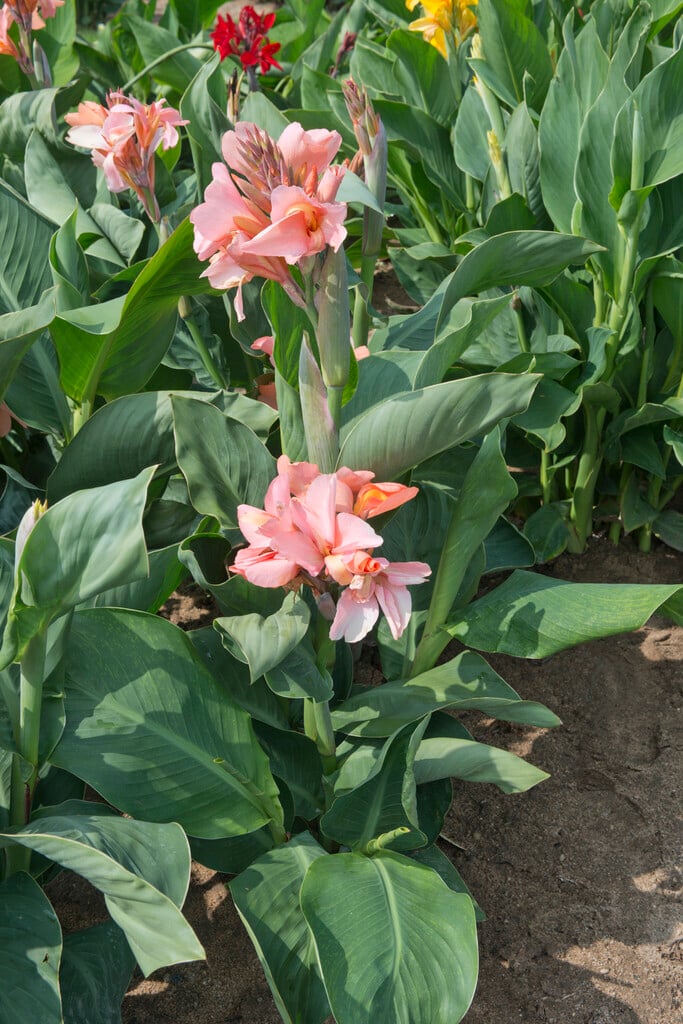
Canna 'Alberich'

<i>Canna</i> 'Alberich' visionspictures.com
Conservatory Greenhouse Herbaceous Perennial

Vigorous clump-forming perennial about 75cm tall, with dark reddish stems and large paddle-shaped, mid-green leaves. Showy panicles of large, full-petalled, pale pink flowers shading to orange and salmon with faint yellow speckles, are produced from midsummer to autumn

Position

Full sun

Soil Types

Chalk, Loam, Sand, Clay

Max Height

0.5-1 metres

Max Spread

0.1-0.5 metres

Size

Time to Maturity
2–5 years
Max Spread
0.1-0.5 metres
Max Height
0.5-1 metres

Growing Conditions

Chalk Loam Sand Clay
Moisture
Moist but well–drained
pH
Acid or Alkaline or Neutral

Position

Full sun
Aspect
South–facing or West–facing
Exposure
Sheltered
Hardiness
H3

Colour & Scent

Season Stem Flower Foliage Fruit
Spring
Summer
Autumn
Winter

Botanical Details

Family
Cannaceae
Native to GB/Ireland
No
Foliage
Deciduous
Habit
Clump forming
Genus
Canna are rhizomatous herbaceous perennials with erect stems bearing ovate leaves, with showy flowers with showy petal-like staminodes and small, coloured petals and sepals, borne in racemes or panicles in summer and autumn
Name Status
Accepted

How to Grow

Cultivation

As a patio plant grow in pots of peat-free compost in a sheltered site in full sun. Plants can also be planted into a sunny border. Water freely and apply a high potassium feed every 2-3 weeks in the growing season. Lift the rhizomes in autumn when frost blackens the foliage. Store over winter in barely moist compost in frost-free conditions. See canna cultivation for further information

Propagation

Propagate by division of the rhizomes in spring

Suggested planting locations and garden types

  • Architectural
  • City and courtyard gardens
  • Coastal
  • Cottage and informal garden
  • Patio and container plants
  • Sub-tropical
  • Bedding
  • Conservatory and greenhouse
  • Flower borders and beds

Pruning

No pruning required but deadhead to promote continued flowering

Pests

May be susceptible to glasshouse red spider mite, aphids, slugs and snails

Diseases

May be susceptible to Canna viruses