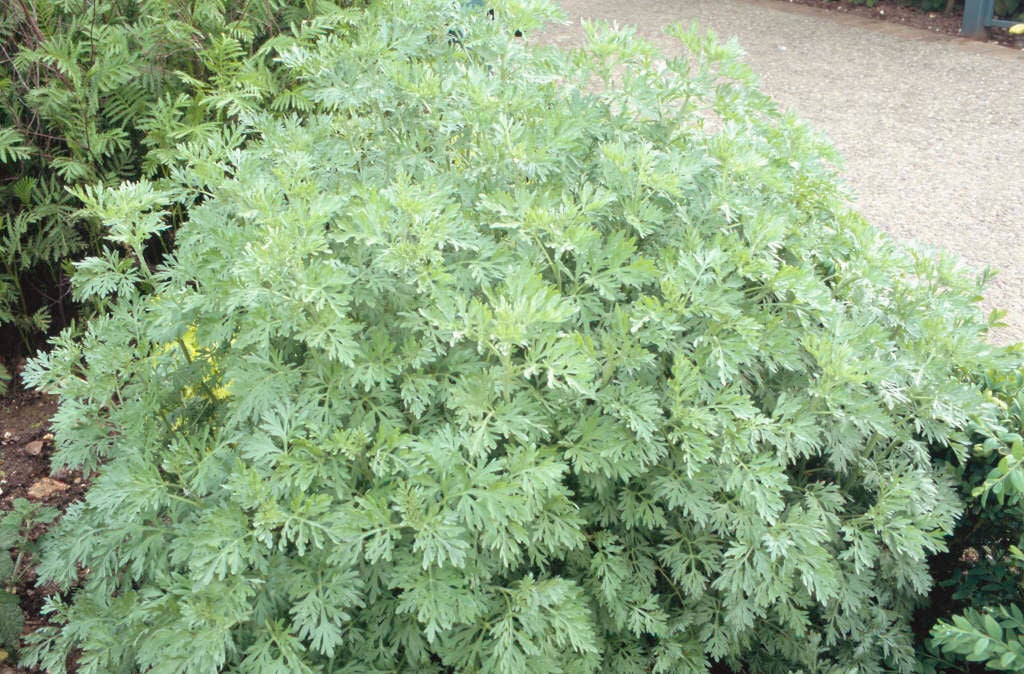
Artemisia absinthium

RHS Plant Profile
wormwood
wormwood RHS

Other common names

absinth, absinthe, common wormwood, girdle of St John, green ginger, holy seed, lad's love, mingwort, old man, old woman, St John's girdle, warmot, wermod lwyd

Herbaceous Perennial Herbs - Culinary

An upright deciduous perennial, with finely divided, highly aromatic grey-green foliage and rather insignificant yellowish flowers in late summer. Has many medicinal benefits and can also be made to create the potent alcoholic drink, absinthe

Position

Full sun

Soil Types

Chalk, Loam, Sand

Max Height

0.5-1 metres

Max Spread

0.1-0.5 metres

Size

Time to Maturity
2–5 years
Max Spread
0.1-0.5 metres
Max Height
0.5-1 metres

Growing Conditions

Chalk Loam Sand
Moisture
Well–drained
pH
Acid or Alkaline or Neutral

Position

Full sun
Aspect
South–facing or West–facing
Exposure
Sheltered
Hardiness
H6

Colour & Scent

Fragrance Foliage
Season Stem Flower Foliage Fruit
Spring
Summer
Autumn
Winter

Botanical Details

Family
Asteraceae
Native to GB/Ireland
Yes
Foliage
Deciduous
Habit
Bushy
Genus
Artemisia can be shrubs, perennials or annuals, evergreen or deciduous, with usually grey, aromatic, often divided foliage and rather insignificant flower-heads
Name Status
Correct
Plant Range
Europe, Asia, N Africa

How to Grow

Cultivation

Grow in fertile well-drained soil in sun. Can die back in heavy, poorly-drained soil

Propagation

Propagate by seed in containers in a cold frame in autumn or spring. Root stem tips or heeled sideshoots as greenwood cuttings in early summer.

Suggested planting locations and garden types

  • Mediterranean climate plants
  • Cottage and informal garden
  • Flower borders and beds
  • Wall side borders

Pruning

Pruning Group 7 Cut back to the lowest, new shoots near the base in mid to late spring

Pests

May be susceptible to aphids and a gall midge

Diseases

May be susceptible to honey fungus