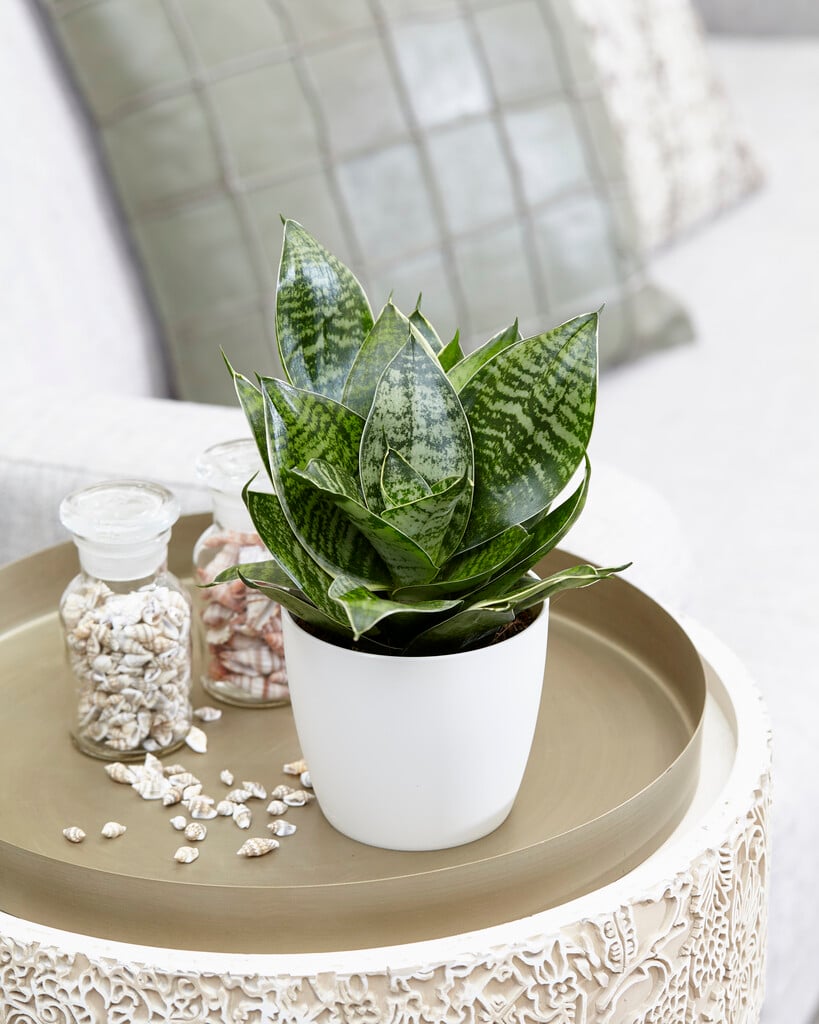
Sansevieria trifasciata 'Hahnii'

RHS Plant Profile
Hahn's sansevieria
Hahn's sansevieria visionspictures.com

Other common names

bird's nest sansevieria

Award of Garden Merit
Houseplants

A compact, rosette forming houseplant, with dark-green sword-shaped leaves and silver-grey horizontal striation. Principally grown for its evergreen foliage, this plant occasionally blooms, producing long stems of star-shaped light green-cream fragrant flowers

Position

Full sun, Partial shade

Soil Types

Loam, Sand

Max Height

0.1-0.5 metres

Max Spread

0.1-0.5 metres

Size

Time to Maturity
2–5 years
Max Spread
0.1-0.5 metres
Max Height
0.1-0.5 metres

Growing Conditions

Loam Sand
Moisture
Well–drained
pH
Alkaline or Neutral

Position

Full sun Partial shade
Aspect
East–facing or South–facing or West–facing
Exposure
Sheltered
Hardiness
H1B

Colour & Scent

Fragrance Flower
Season Stem Flower Foliage Fruit
Spring
Summer
Autumn
Winter

Botanical Details

Family
Asparagaceae
Native to GB/Ireland
No
Foliage
Evergreen
Habit
Clump forming
Potentially harmful
Harmful if eaten. Wear gloves and other protective equipment when handling
Genus
Sansevieria are stemless, erect, rhizomatous, succulent perennials with evergreen, ovate or strap-shaped, leathery leaves often attractively marbled, and short spikes of small fragrant tubular greenish-white flowers
Name Status
Accepted

How to Grow

Cultivation

Grow as a houseplant or under glass in a frost-free environment. Provide bright light, although plant will adapt to lower-light conditions. Repot only when plant fills container. Avoid overwatering, allowing compost to dry out between waterings. Tolerant of neglect. See Sansevieria and houseplant cultivation for further advice

Propagation

Propagate by division, or removing suckers.

Suggested planting locations and garden types

  • Houseplants
  • Low Maintenance

Pruning

No pruning required. Remove dead leaves where needed

Pests

Maybe susceptible to mealybug and glasshouse red spider mite.

Diseases

Generally disease-free