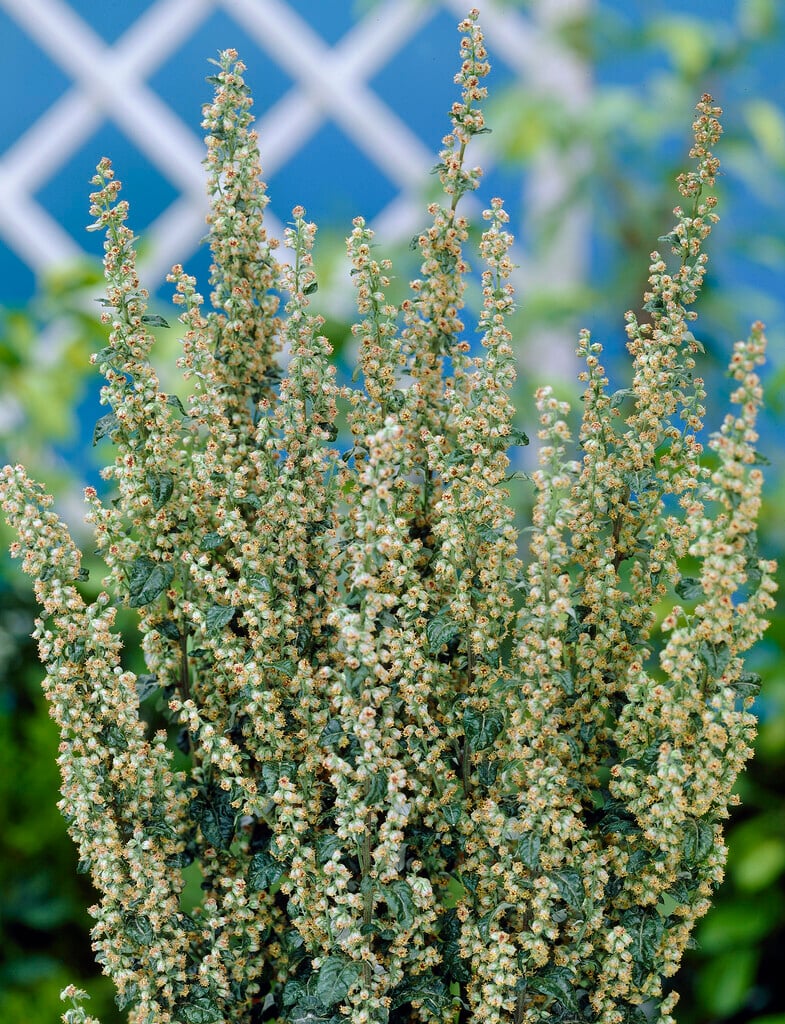
Artemisia vulgaris

RHS Plant Profile
mugwort
mugwort visionspictures.com

Other common names

bulwand, fellon herb, felon herb, greenfinger, motherwort, sailor's tobacco, St John's herb, St John's plant, beidiog lwyd

Herbaceous Perennial

An upright, rhizomatous, herbaceous perennial growing up to 2.5m tall with aromatic, petiolate, deeply lobed, deep green leaves. Creamy-yellow flowers appear in late Summer as dense, leafy panicles. A well known medicinal plant with edible, bitter leaves that are often used in tea, tinctures and cordials.

Position

Full sun, Partial shade

Soil Types

Loam, Sand, Chalk

Max Height

1.5-2.5 metres

Max Spread

0.5-1 metres

Size

Time to Maturity
2–5 years
Max Spread
0.5-1 metres
Max Height
1.5-2.5 metres

Growing Conditions

Loam Sand Chalk
Moisture
Well–drained or Moist but well–drained
pH
Acid or Alkaline or Neutral

Position

Full sun Partial shade
Aspect
South–facing or West–facing
Exposure
Sheltered
Hardiness
H6

Colour & Scent

Fragrance Foliage
Season Stem Flower Foliage Fruit
Spring
Summer
Autumn
Winter

Botanical Details

Family
Asteraceae
Native to GB/Ireland
Yes
Foliage
Deciduous
Habit
Bushy, Columnar upright
Genus
Artemisia can be shrubs, perennials or annuals, evergreen or deciduous, with usually grey, aromatic, often divided foliage and rather insignificant flower-heads
Name Status
Correct

How to Grow

Cultivation

Grow in a moist but well drained loamy soil in full sun or partial shade. It is a fast growing and prolific self seeder so remove flower heads to prevent it spreading. Prune back in Autumn to encourage healthy, vigorous growth the following Spring

Propagation

Propagate by seed with a period of cold stratification or by division of the rhizome in Spring or Autumn

Suggested planting locations and garden types

  • City and courtyard gardens
  • Cottage and informal garden
  • Low Maintenance
  • Flower borders and beds

Pruning

Prune back growth to 5-10cm above ground level in Autumn. Remove flower heads to prevent self-seeding

Pests

Generally pest-free

Diseases

May be susceptible to honey fungus