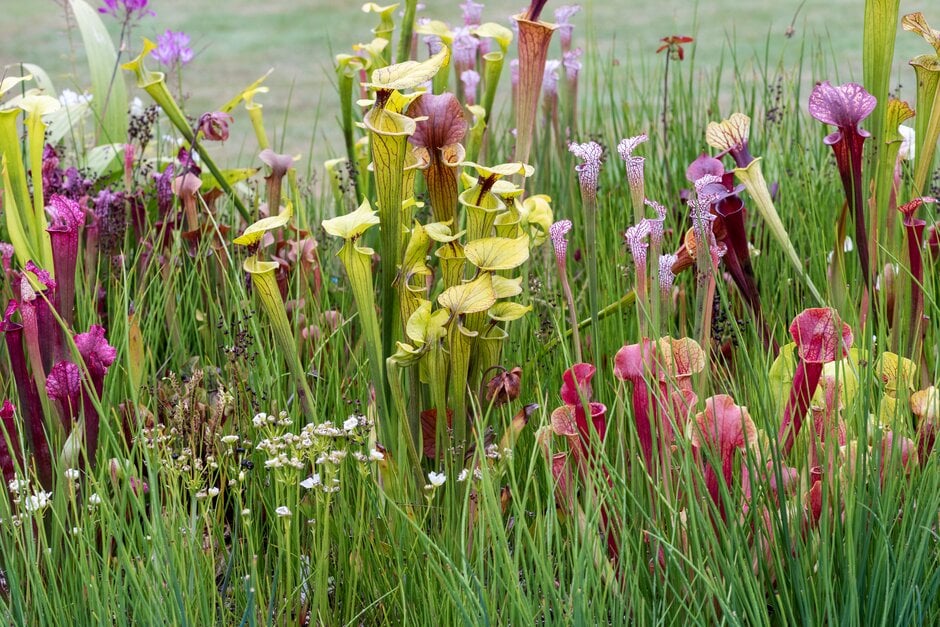
Sarracenia

RHS Plant Profile
pitcher plant
pitcher plant RHS

Other common names

devil's boots, forefather's cup, sidesaddle flower

Bogs Conservatory Greenhouse Houseplants

Sarracenia are evergreen or herbaceous, rhizomatous perennials with rosettes of modified leaf stems called 'phyllodes' which function as insect-catching tubular pitchers with hooded lids. Solitary, nodding cup-shaped flowers appear in spring above these pitchers. They feed off insects which are caught and digested inside their pitcher. It can be difficult to confirm colours as this is very much dependent on cultural factors such as soil, exposure to sunlight, time of year etc. but generally you can expect vibrant, varying shades of green, red and white. Flowers can be red, orange, cream or yellow

Position

Full sun

Soil Types

Loam

Max Height

0.1-0.5 metres

Max Spread

0.5-1 metres

Size

Time to Maturity
2–5 years
Max Spread
0.5-1 metres
Max Height
0.1-0.5 metres

Growing Conditions

Loam
Moisture
Moist but well–drained or Poorly–drained
pH
Acid

Position

Full sun
Aspect
South–facing or West–facing
Exposure
Sheltered
Hardiness
H3

Colour & Scent

Season Stem Flower Foliage Fruit
Spring
Summer
Autumn
Winter

Botanical Details

Family
Sarraceniaceae
Native to GB/Ireland
No
Foliage
Evergreen
Habit
Clump forming, Columnar upright, Matforming
Genus
Sarracenia can be evergreen or herbaceous, rhizomatous perennials with rosettes of phyllodes mostly modified into insect-catching tubular pitchers with hooded lids, and solitary, nodding cup-shaped flowers in spring
Name Status
Correct

How to Grow

Cultivation

Grow under glass, keep moist in full light with shelter from hot sun. Use an acidic potting medium with moss. In winter, keep slightly drier, cool and well ventilated. Irrigate with lime-free water. See carnivorous plant cultivation

Propagation

Propagate by division

Suggested planting locations and garden types

  • Patio and container plants
  • Conservatory and greenhouse

Pruning

No pruning required. Remove dead leaves as necessary

Pests

May be susceptible to scale insects, mealybugs, aphids and tortrix moth caterpillars

Diseases

Generally disease-free