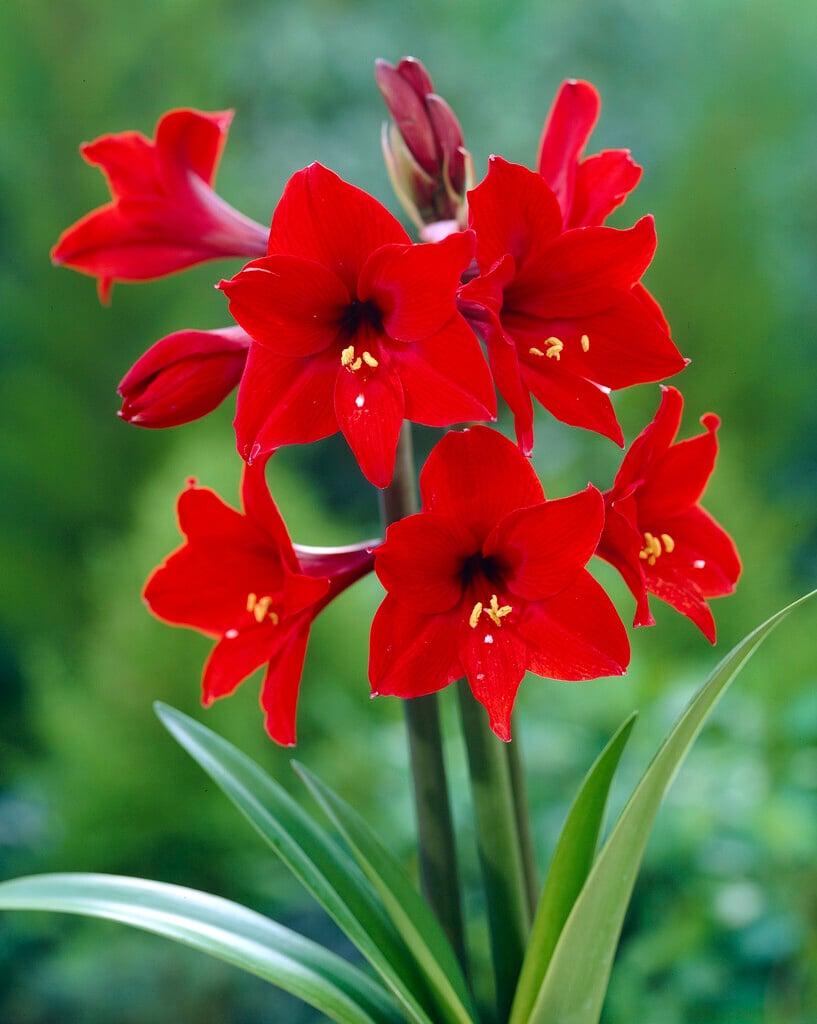
A dwarf, perennial bulb with long, strap-shaped green leaves and several stems of single, dark red to orange-red flowers with a darker centre
Position
Soil Types
Max Height
0.1-0.5 metres
Max Spread
0.1-0.5 metres
A dwarf, perennial bulb with long, strap-shaped green leaves and several stems of single, dark red to orange-red flowers with a darker centre
0.1-0.5 metres
0.1-0.5 metres
| Season | Stem | Flower | Foliage | Fruit |
|---|---|---|---|---|
| Spring | ||||
| Summer | ||||
| Autumn | ||||
| Winter |
Plant bulbs in the autumn with the neck and shoulder above the soil surface. Grow in a peat-free, loam-based potting compost. Water sparingly until in active growth, water regulary when in growth and feed fortnightly with a balanced liquid feed. After flowering, reduce the watering as the leaves die off. Keep dry when dormant. This hippeastrum can also be planted in a dry, sunny border but will need winter protection. See hippeastrum cultivation and bulbs for Christmas flowering for further information
Propagate seed as soon as they are ripe. Keep seedlings growing without a dormant period to encourage early flowering. bulbs will take between three and five years to flower. Remove bulb offsets in the autumn
Cut back flowering stems as they go over. Cut back leaves as they go yellow, when bulb is going into dormancy
May be susceptible to bulb scale mite, large narcissus bulb fly and slugs and snails throughout the summer months
May be susceptible to various fungal diseases
The new app packed with trusted gardening know-how
Download app