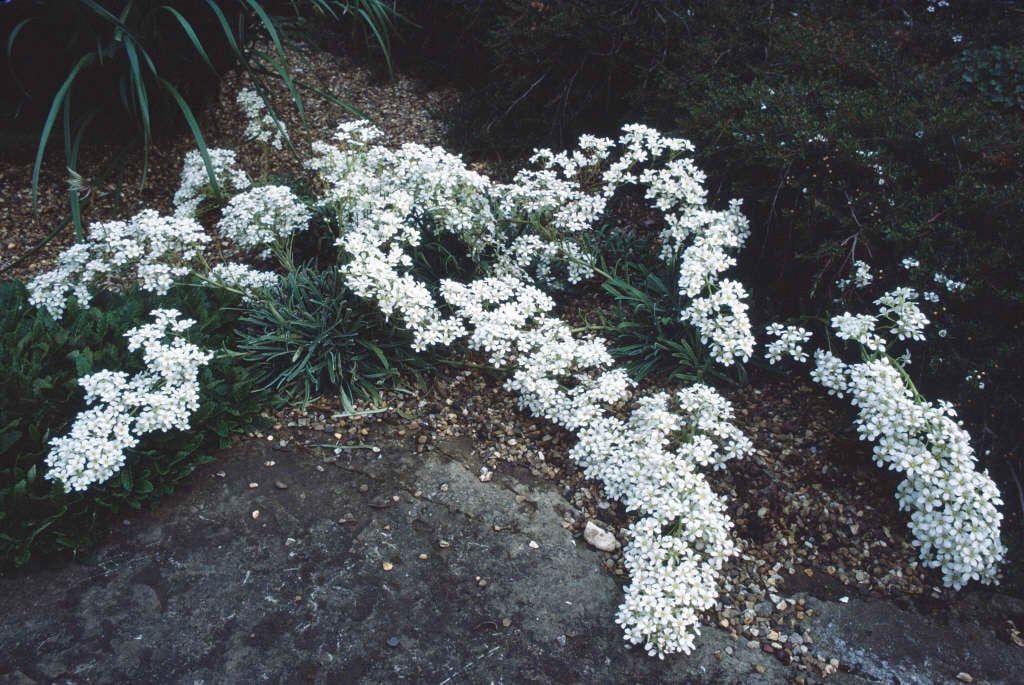
Saxifraga callosa (8)

RHS Plant Profile
limestone saxifrage
limestone saxifrage RHS 1985

Synonyms

Saxifraga lingulata
Saxifraga callosa lingulata

Award of Garden Merit
Alpine Rockery

An evergreen perennial with rosettes of linear, lime-encrusted silvery-grey leaves to 8cm in length. Starry white flowers 1cm in width are carried in large open panicles on arching stems to 25cm

Position

Full sun

Soil Types

Chalk

Max Height

0.1-0.5 metres

Max Spread

0-0.1 metre

Size

Time to Maturity
2–5 years
Max Spread
0-0.1 metre
Max Height
0.1-0.5 metres

Growing Conditions

Chalk
Moisture
Well–drained
pH
Alkaline

Position

Full sun
Aspect
South–facing or East–facing
Exposure
Exposed
Hardiness
H5

Colour & Scent

Season Stem Flower Foliage Fruit
Spring
Summer
Autumn
Winter

Botanical Details

Family
Saxifragaceae
Native to GB/Ireland
No
Foliage
Evergreen
Habit
Clump forming
Genus
Saxifraga can be annuals, biennials, evergreen or herbaceous perennials, mostly mat-forming in habit, with simple or palmately lobed leaves and starry or rounded flowers which may be solitary of in panicles or cymes
Name Status
Correct
Horticultural Group
Ligulatae section saxifrages are evergreen perennials forming monocarpic rosettes, usually clustered, of narrowly strap-shaped or oblong, lime-encrusted leaves, with sprays of small white, pale yellow or pink flowers in late spring or early summer
Plant Range
Europe

How to Grow

Cultivation

Grow in moderately fertile, very well-drained, alkaline soil in full sun. May be intolerant of winter wet, can be grown in a pot in an alpine house

Propagation

Propagate by seed sown in pots in an open frame in autumn. Propagate by detaching rosettes and rooting as cuttings in late spring or early summer

Suggested planting locations and garden types

  • Patio and container plants
  • Gravel garden
  • Rock garden

Pruning

No pruning required

Pests

May be susceptible to aphids, slugs, vine weevil and glasshouse red spider mite

Diseases

Generally disease-free