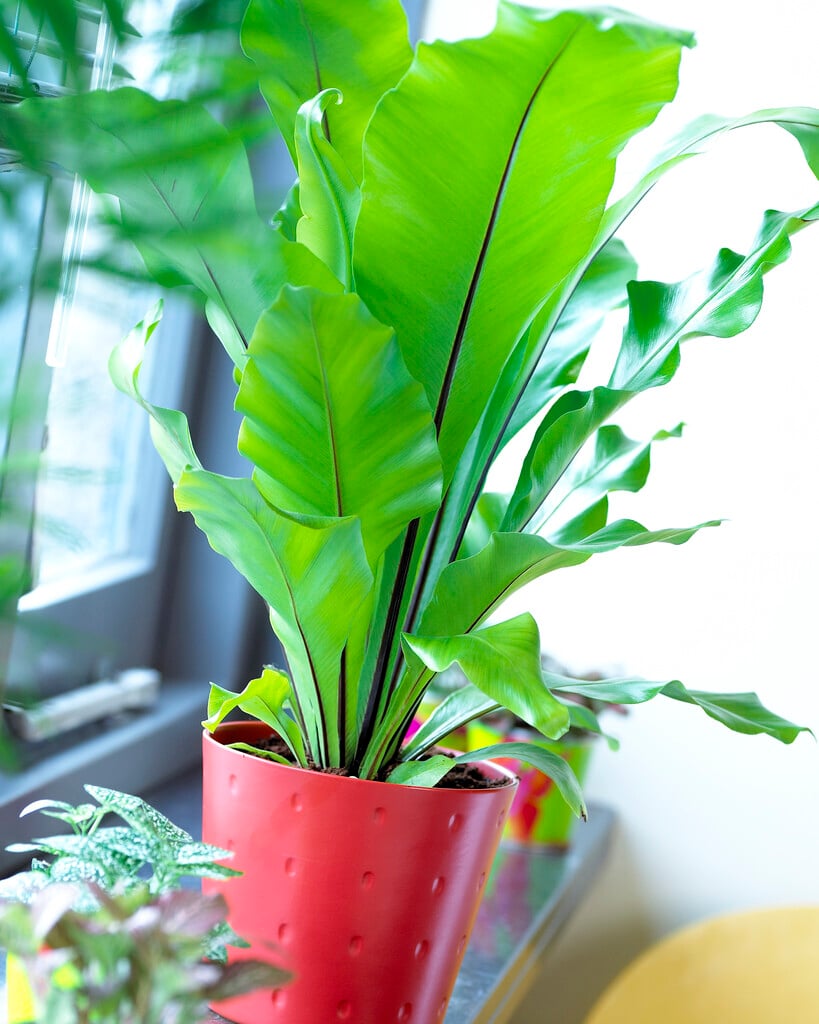
Asplenium nidus

RHS Plant Profile
bird's nest fern
bird's nest fern visionspictures.com
Conservatory Greenhouse Ferns Houseplants

A slow-growing, tender, evergreen epiphytic fern forming rosettes or 'nests' of upright, glossy, bright green fronds to 1.5m long and flat, with a wavy edge and pointed and curled tips

Position

Partial shade

Soil Types

Loam

Max Height

1-1.5 metres

Max Spread

0.5-1 metres

Size

Time to Maturity
5–10 years
Max Spread
0.5-1 metres
Max Height
1-1.5 metres

Growing Conditions

Loam
Moisture
Moist but well–drained
pH
Acid or Neutral

Position

Partial shade
Aspect
West–facing or East–facing
Exposure
Sheltered
Hardiness
H1B

Colour & Scent

Season Stem Flower Foliage Fruit
Spring
Summer
Autumn
Winter

Botanical Details

Family
Aspleniaceae
Native to GB/Ireland
No
Foliage
Evergreen
Habit
Tufted, Clump forming
Genus
Asplenium are evergreen ferns with short, usually erect rhizomes bearing a rosette of slightly leathery fronds which may be simple, pinnate to 3-pinnate
Name Status
Correct
Plant Range
Old World Tropics

How to Grow

Cultivation

Grow indoors in bright indirect light, in a container using three parts peat-free multipurpose compost, one part peat-free John Innes No.3, and added horticultural grit, occasionally misting the fronds for moderate humidity. Water to keep the compost moist but not soggy and use a half strength general liquid fertiliser monthly between May and August. See how to grow ferns for further advice

Propagation

Propagate by division, or propagate by sowing spores as soon as ripe at 21°C

Suggested planting locations and garden types

  • Houseplants
  • Sub-tropical
  • Conservatory and greenhouse

Pruning

Dead or damaged fronds may be removed as necessary

Pests

May be susceptible to scale insects

Diseases

Generally disease-free