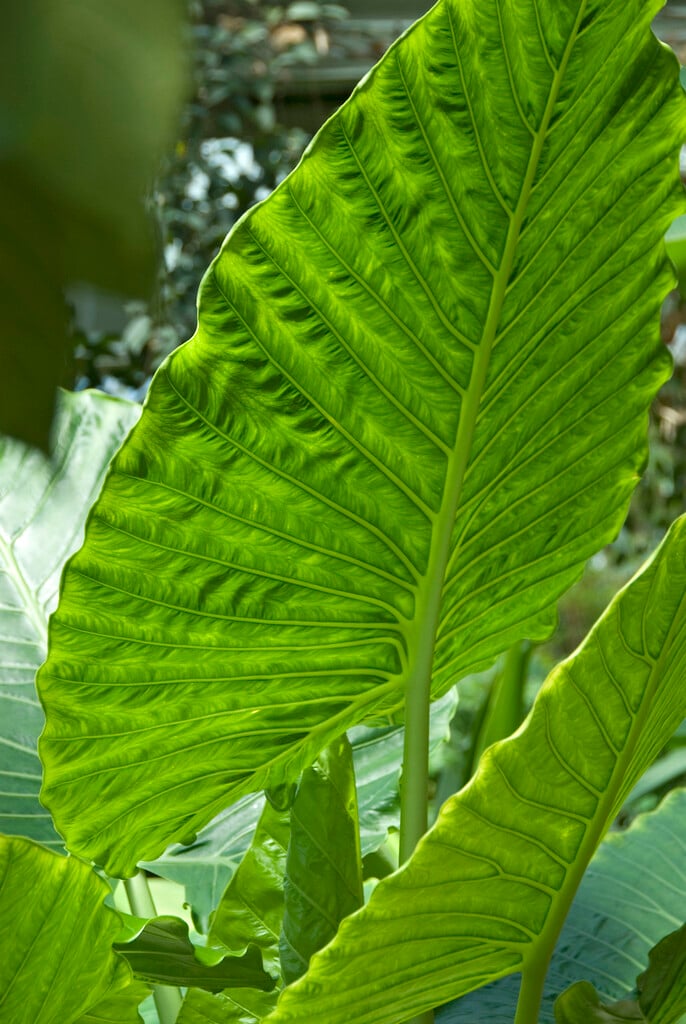
Alocasia brisbanensis

<em>Alocasia</em> <em>brisbanensis</em> visionspictures.com
Herbaceous Perennial

A species of rhizomatous evergreen perennials native to the rainforests of Eastern Australia grown as a foliage plant, with large, rippled, spade-shaped dark green glossy foliage on dark green stems and fragrant, green-cream flowers which appear in the summer, similar to arum lily. Clusters of red berries appear on spikes after flowering

Position

Full sun, Partial shade

Soil Types

Chalk, Loam, Sand

Max Height

1-1.5 metres

Max Spread

1-1.5 metres

Size

Time to Maturity
2–5 years
Max Spread
1-1.5 metres
Max Height
1-1.5 metres

Growing Conditions

Chalk Loam Sand
Moisture
Well–drained
pH
Acid or Alkaline or Neutral

Position

Full sun Partial shade
Aspect
South–facing or West–facing
Exposure
Sheltered
Hardiness
H2

Colour & Scent

Fragrance Flower
Season Stem Flower Foliage Fruit
Spring
Summer
Autumn
Winter

Botanical Details

Family
Araceae
Native to GB/Ireland
No
Foliage
Evergreen
Habit
Bushy, Clump forming
Potentially harmful
TOXIC if eatenskin/eye irritant. Wear gloves and other protective equipment when handling. TOXIC to pets - see the HTA guide to potentially harmful plants for further information and useful contact numbers
Genus
Alocasia are robust evergreen rhizomatous or tuberous perennials with large, usually peltate, leaves with conspicuous veins; insignificant flowering spathes may be followed by orange-red fruits
Name Status
Correct

How to Grow

Cultivation

Grow indoors in a peat-free houseplant compost with added perlite, in bright, indirect light. Water freely and apply a general liquid fertiliser every 2-3 weeks from spring to autumn. Provide high humidity by placing the container on a tray of moist gravel or pebbles. Reduce watering to a minimum in winter, and keep above 15°C. See Alocasia for further advice

Propagation

Propagate by division of offsets at the base of the plant

Suggested planting locations and garden types

  • Architectural
  • City and courtyard gardens
  • Cottage and informal garden
  • Houseplants
  • Mediterranean climate plants
  • Patio and container plants
  • Sub-tropical
  • Conservatory and greenhouse
  • Flower borders and beds

Pruning

No pruning required

Pests

May be susceptible to aphids and caterpillars

Diseases

Generally disease-free