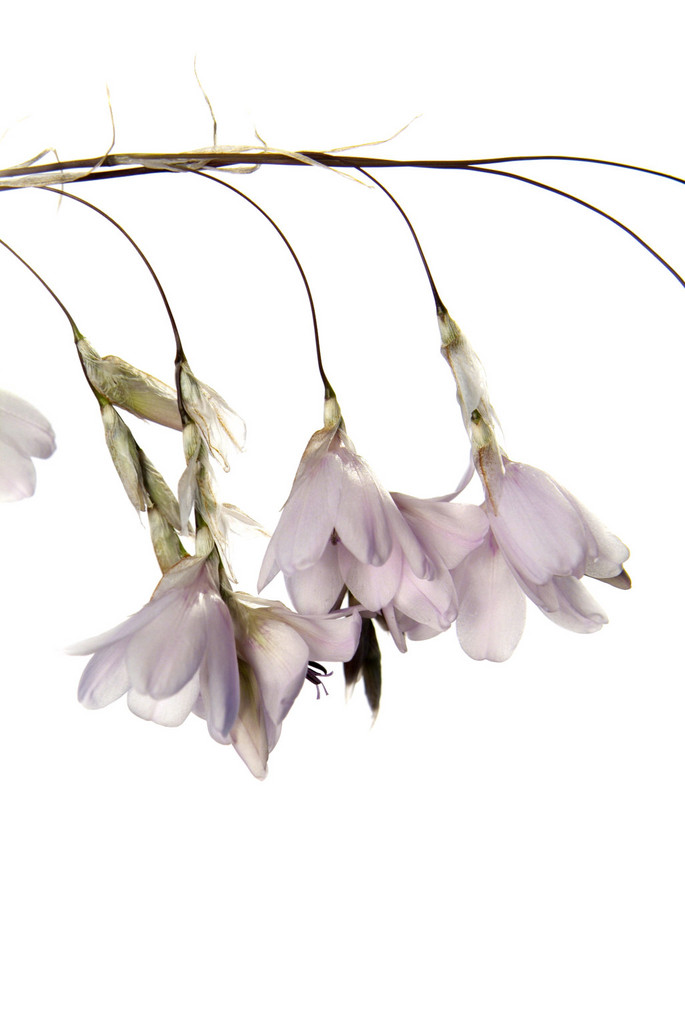
Dierama 'Guinevere'

RHS Plant Profile
wandflower 'Guinevere'
wandflower 'Guinevere' RHS
Bulbs Herbaceous Perennial

A clump-forming perennial with up to 1m long narrow leaves. In summer it produces arching stems with nodding, cool-white flowers with a slight pink-purple tinge

Position

Full sun

Soil Types

Chalk, Loam, Sand

Max Height

1-1.5 metres

Max Spread

0.5-1 metres

Size

Time to Maturity
2–5 years
Max Spread
0.5-1 metres
Max Height
1-1.5 metres

Growing Conditions

Chalk Loam Sand
Moisture
Moist but well–drained or Well–drained
pH
Acid or Alkaline or Neutral

Position

Full sun
Aspect
South–facing or West–facing
Exposure
Sheltered
Hardiness
H4

Colour & Scent

Season Stem Flower Foliage Fruit
Spring
Summer
Autumn
Winter

Botanical Details

Family
Iridaceae
Native to GB/Ireland
No
Foliage
Evergreen
Habit
Bushy
Genus
Dierama are evergreen, clump-forming cormous perennials with long, narrow leaves and slender arching stems bearing nodding, bell-shaped flowers in summer
Name Status
Accepted

How to Grow

Cultivation

Dierama cultivation - grow in humus-rich, well-drained soil in a sheltered situation with full sun. Avoid planting in soils prone to staying wet, especially during winter; can be damaged by winter cold and wet. Plant in spring

Propagation

They may resent disturbance so leave until really congested before division of clumps in spring. Do not allow the corms to dry out. They may take 1-2 years to flower freely again

Suggested planting locations and garden types

  • Coastal
  • City and courtyard gardens
  • Cottage and informal garden
  • Gravel garden
  • Banks and slopes
  • Flower borders and beds

Pruning

Tidy any winter-damaged foliage by cutting to the base in spring

Pests

Generally pest-free

Diseases

Generally disease-free