Pachysandra axillaris

RHS Plant Profile
axillary pachysandra
axillary pachysandra RHS
Shrubs

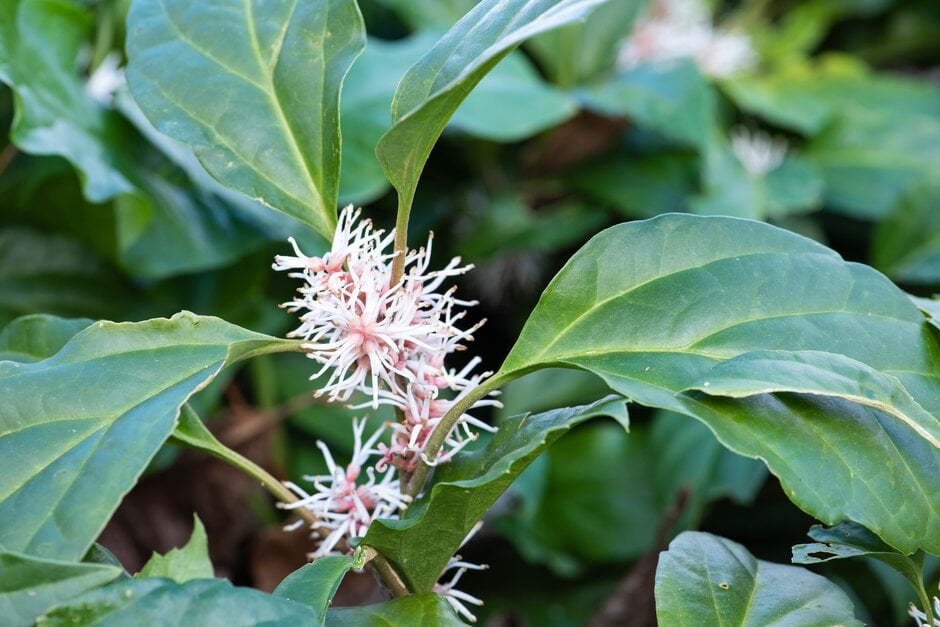
A low-growing evergreen sub-shrub, 30-50cm high, with a creeping habit and glossy, coarsely toothed deep green leaves. Spikes of tiny white flowers are produced from the leaf axils in spring, followed by cream or reddish berries with distinctive horn-like styles

Position

Full shade, Partial shade

Soil Types

Chalk, Clay, Loam, Sand

Max Height

0.1-0.5 metres

Max Spread

0.5-1 metres

Size

Time to Maturity
2–5 years
Max Spread
0.5-1 metres
Max Height
0.1-0.5 metres

Growing Conditions

Chalk Clay Loam Sand
Moisture
Moist but well–drained or Well–drained
pH
Acid or Alkaline or Neutral

Position

Full shade Partial shade
Aspect
East–facing or North–facing or West–facing
Exposure
Exposed or Sheltered
Hardiness
H5

Colour & Scent

Season Stem Flower Foliage Fruit
Spring
Summer
Autumn
Winter

Botanical Details

Family
Buxaceae
Native to GB/Ireland
No
Foliage
Evergreen
Habit
Bushy, Spreading branched
Genus
Pachysandra are mat-forming evergreen perennials or subshrubs with creeping stems and short upright branches bearing leathery leaves clustered at the tips, and erect spikes of small flowers, the males with prominent white stamens
Name Status
Correct

How to Grow

Cultivation

Tolerant of all but very dry soils. Grow in full or part shade; a useful ground cover for shady corners or woodland

Propagation

Propagate by seed, by division in spring, or by softwood cuttings in early summer

Suggested planting locations and garden types

  • Banks and slopes
  • Ground cover
  • Underplanting of roses and shrubs

Pruning

No pruning required

Pests

May be susceptible to slugs and snails

Diseases

Generally disease-free