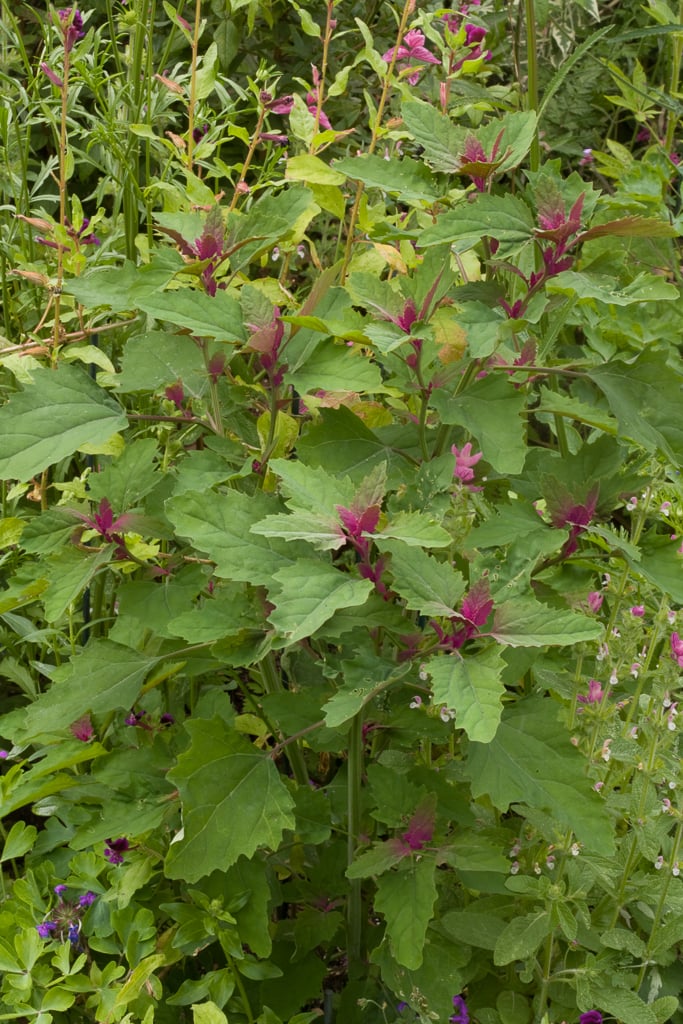
Chenopodium giganteum 'Magentaspreen'

RHS Plant Profile
tree spinach 'Magentaspreen'
tree spinach 'Magentaspreen' John Fielding
Annual Biennial Herbs - Culinary

An edible annual with long spikes of tiny red flowers, the older leaves are mid green arrow shaped and serrated. The younger leaves and centre rosettes open out as a bright magenta, and have a glittery appearance, with a dark pink underside, making the leaves a striking addition to a salad. Tasting similar to spinach and chard, with a slight hint of asparagus when cooked. Keep picking for tasty and tender leaves, and to avoid the plant running to seed too soon

Position

Full sun, Partial shade

Soil Types

Chalk, Clay, Loam, Sand

Max Height

1.5-2.5 metres

Max Spread

1-1.5 metres

Size

Time to Maturity
1 year
Max Spread
1-1.5 metres
Max Height
1.5-2.5 metres

Growing Conditions

Chalk Clay Loam Sand
Moisture
Well–drained or Moist but well–drained
pH
Neutral or Alkaline or Acid

Position

Full sun Partial shade
Aspect
East–facing or South–facing or West–facing
Exposure
Sheltered
Hardiness
H4

Colour & Scent

Season Stem Flower Foliage Fruit
Spring
Summer
Autumn
Winter

Botanical Details

Family
Amaranthaceae
Native to GB/Ireland
No
Foliage
Deciduous
Habit
Columnar upright, Bushy
Genus
Chenopodium can be annuals or perennials, with often mealy stems and foliage, simple or lobed leaves and minute flowers in termianl or axillary clusters, in a few species followed by colourful fruits
Name Status
Unresolved

How to Grow

Cultivation

Grow in any well-drained fertile soil, in a sunny or semi-shaded position. In the ideal growing conditions they can grow quite rapidly and may require staking if they become too tall

Propagation

Propagate by seed. See sowing vegetable seeds

Suggested planting locations and garden types

  • Cottage and informal garden
  • Sub-tropical

Pruning

Harvest the leaves as required, to keep the plant compact and cropping well

Pests

Generally pest-free

Diseases

Generally disease-free