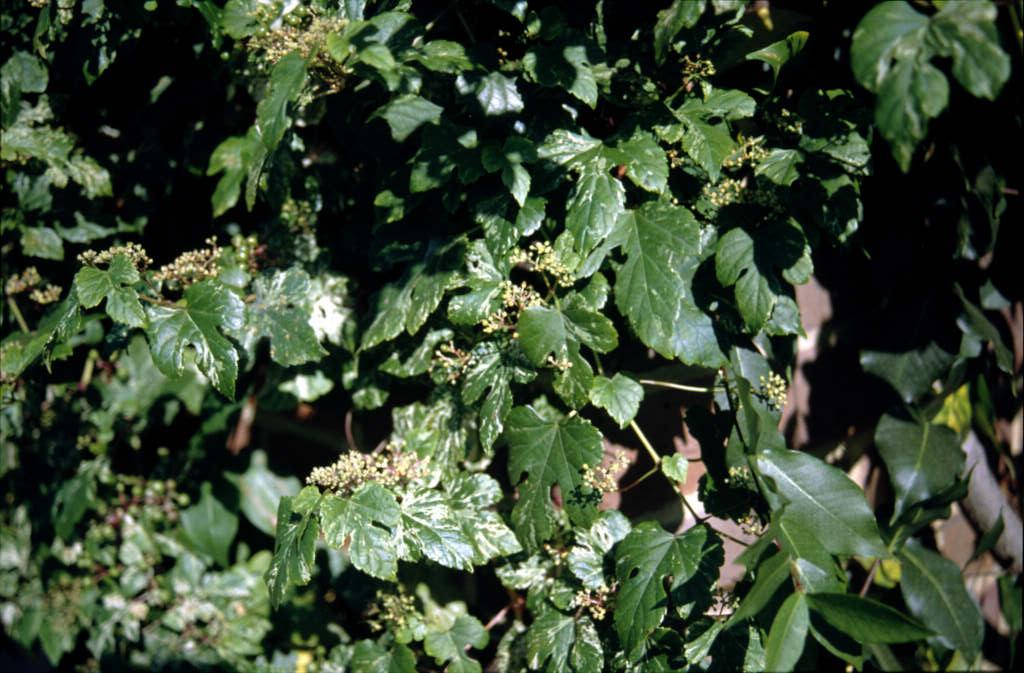
Ampelopsis brevipedunculata 'Elegans' (v)

RHS Plant Profile
variegated porcelain berry
variegated porcelain berry RHS

Other common names

ampelopsis 'Elegans'

Synonyms

Ampelopsis brevipedunculata 'Tricolor'
Ampelopsis glandulosa var. brevipedunculata 'Tricolor'
Ampelopsis glandulosa var. brevipedunculata f. citrulliodes 'Elegans'
Ampelopsis brevipedunculata 'Variegata'
Ampelopsis glandulosa var. brevipedunculata 'Elegans'
Ampelopsis variegata hort.
Ampelopsis elegantissima
Ampelopsis brevipedunculata var. elegans

Climber Wall Shrub Conservatory Greenhouse Houseplants

A vigorous climber with heart-shaped or 3 to 5-lobed leaves to 12cm long, heavily-mottled with white and pink. Branched clusters of small green flowers may appear in summer, followed by pinkish-purple berries that later turn blue

Position

Full sun, Partial shade

Soil Types

Chalk, Clay, Loam, Sand

Max Height

2.5-4 metres

Max Spread

1.5-2.5 metres

Size

Time to Maturity
5–10 years
Max Spread
1.5-2.5 metres
Max Height
2.5-4 metres

Growing Conditions

Chalk Clay Loam Sand
Moisture
Moist but well–drained
pH
Acid or Alkaline or Neutral

Position

Full sun Partial shade
Aspect
South–facing or West–facing
Exposure
Sheltered
Hardiness
H6

Colour & Scent

Season Stem Flower Foliage Fruit
Spring
Summer
Autumn
Winter

Botanical Details

Family
Vitaceae
Native to GB/Ireland
No
Foliage
Deciduous
Habit
Climbing
Potentially harmful
Fruit are ornamental - not to be eaten. Wear gloves and other protective equipment when handling Pets: Fruit are ornamental - not to be eaten - see the HTA guide to potentially harmful plants for further information and useful contact numbers
Genus
Ampelopsis are vigorous self-clinging deciduous woody climbers with attractive simple, lobed or pinnately divided leaves often colouring in autumn, and insignificant greenish flowers, followed by blue or black berries
Name Status
Accepted

How to Grow

Cultivation

Grow in any moist but well-drained, fertile soil. Best planted against a warm, sheltered, partially-shaded wall. Can be shy to flower and fruit. May also be grown as a houseplant

Propagation

Propagate by seed in containers in an open frame in autumn, or stratify and sow seed in containers in a cold frame in spring. Root softwood cuttings in summer

Suggested planting locations and garden types

  • Patio and container plants
  • Wall side borders

Pruning

Pruning group 11 in spring

Pests

Generally pest-free

Diseases

Generally disease-free