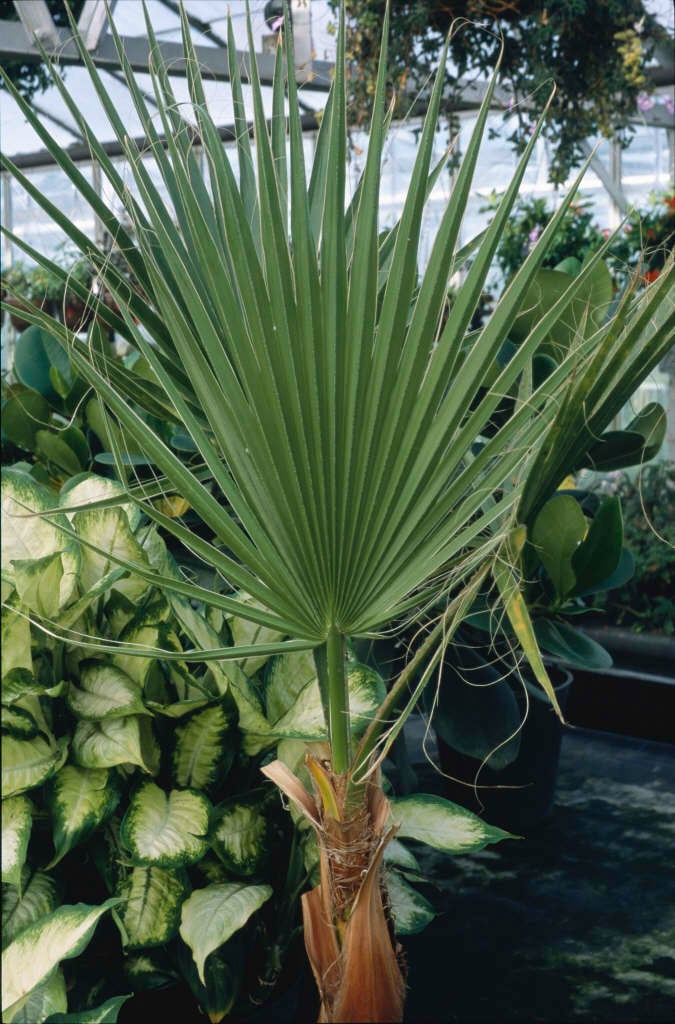
Washingtonia × filibusta

RHS Plant Profile
Washington palm
Washington palm RHS 2002

Other common names

Californian washingtonia, cotton palm, desert fan palm, northern washingtonia

Synonyms

Washingtonia 'Filibusta'

Conservatory Greenhouse Palms

a tree-like palm with a stout trunk to 20m, and arching, narrow-lobed, fan-shaped leaves 2-3m in length; flowers creamy-white, in large panicles

Position

Partial shade

Soil Types

Loam

Max Height

Higher than 12 metres

Max Spread

2.5-4 metres

Size

Time to Maturity
20–50 years
Max Spread
2.5-4 metres
Max Height
Higher than 12 metres

Growing Conditions

Loam
Moisture
Well–drained
pH
Acid or Neutral

Position

Partial shade
Aspect
East–facing or North–facing
Exposure
Sheltered
Hardiness
H1C

Colour & Scent

Season Stem Flower Foliage Fruit
Spring
Summer
Autumn
Winter

Botanical Details

Family
Arecaceae
Native to GB/Ireland
No
Foliage
Evergreen
Habit
Bushy
Genus
Washingtonia are large evergreen palms with stout solitary trunks bearing long-stalked, rounded leaves palmately divided into linear segments, and large, arching panicles of flowers, followed by small, berry-like black fruits
Name Status
Correct
Plant Range
S. California, W. Arizona, Mexico

How to Grow

Cultivation

Grow under glass in a peat-free, loam-based compost with equal parts added pulverised bark and organic matter, in bright light but with protection from the sun. Water moderately and provide moderate humidity when in growth and apply a liquid fertiliser monthly during the summer. Water sparingly in winter

Propagation

Propagate by seed sown at not less than 24°C

Suggested planting locations and garden types

  • Architectural
  • Patio and container plants

Pruning

No pruning required

Pests

May be susceptible to glasshouse red spider mite and scale insects

Diseases

Generally disease-free