Saxifraga 'Conwy Star' (_fortunei_) (5)

RHS Plant Profile
saxifrage 'Conwy Star'
saxifrage 'Conwy Star' RHS
Herbaceous Perennial

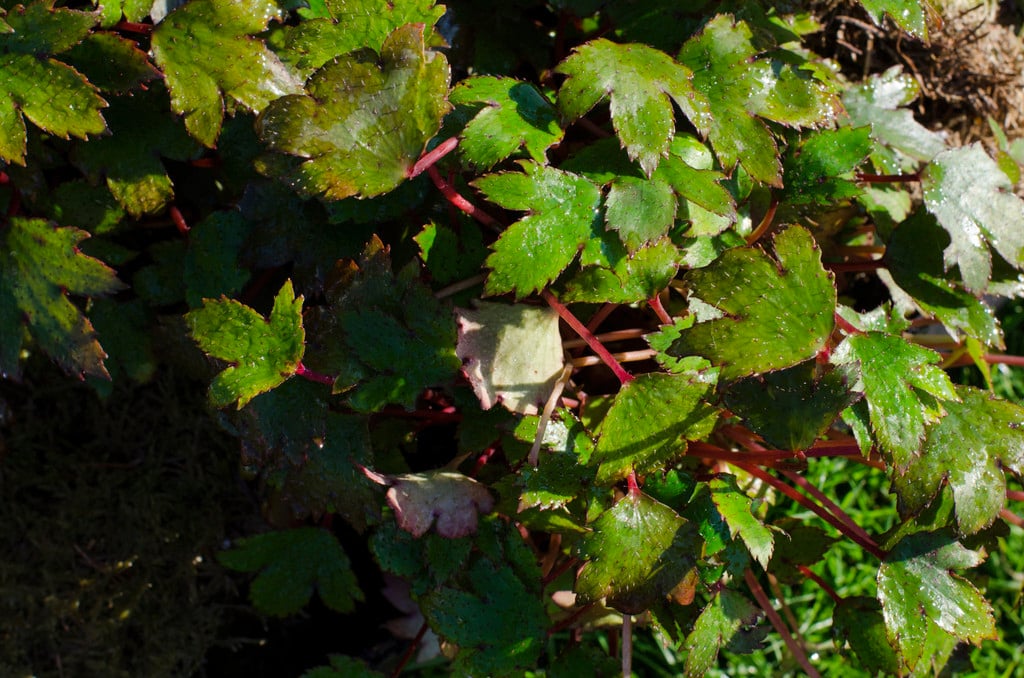
A low-growing, clump-forming perennial to 10cm high and 25cm wide. The lobed, fleshy leaves are covered in red bristles and their colour deepens with age frombronze-green to reddish-bronze. White flowers with extra petals are borne on short stems in the autumn

Position

Full sun, Partial shade

Soil Types

Loam, Sand

Max Height

0.1-0.5 metres

Max Spread

0.1-0.5 metres

Size

Time to Maturity
2–5 years
Max Spread
0.1-0.5 metres
Max Height
0.1-0.5 metres

Growing Conditions

Loam Sand
Moisture
Moist but well–drained
pH
Acid or Neutral

Position

Full sun Partial shade
Aspect
East–facing or North–facing or South–facing or West–facing
Exposure
Exposed or Sheltered
Hardiness
H4

Colour & Scent

Season Stem Flower Foliage Fruit
Spring
Summer
Autumn
Winter

Botanical Details

Family
Saxifragaceae
Native to GB/Ireland
No
Foliage
Deciduous
Habit
Bushy
Genus
Saxifraga can be annuals, biennials, evergreen or herbaceous perennials, mostly mat-forming in habit, with simple or palmately lobed leaves and starry or rounded flowers which may be solitary of in panicles or cymes
Name Status
Accepted
Horticultural Group
Irregulares section saxifrages are shade-tolerant, usually herbaceous perennials forming rosettes broad, palmately lobed leaves, with leafless stems bearing lax panicles of small flowers with short upper, and longer lower petals, in summer or autumn

How to Grow

Cultivation

Grow in well-drained, moist, humus-rich soil in deep or partial shade

Propagation

Propagate by division in spring

Suggested planting locations and garden types

  • City and courtyard gardens
  • Coastal
  • Cottage and informal garden
  • Rock garden
  • Patio and container plants
  • Flower borders and beds
  • Garden edging

Pruning

No pruning required

Pests

Generally pest-free but may be susceptible to slugs and vine weevil

Diseases

Generally disease-free