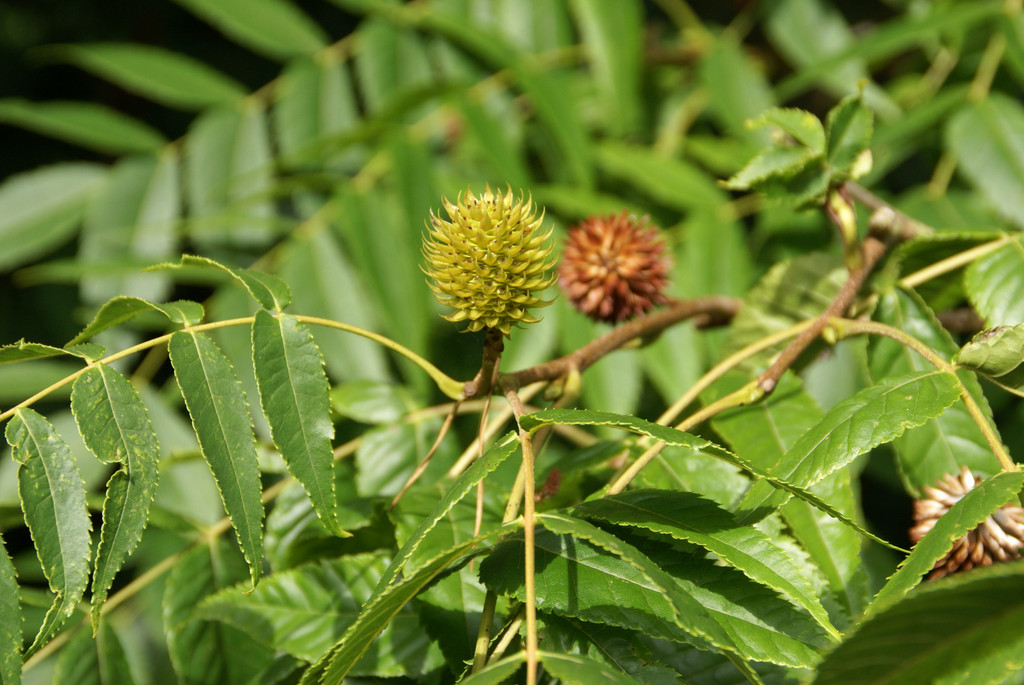
Platycarya strobilacea

<em>Platycarya</em> <em>strobilacea</em> RHS

Synonyms

Platycarya longipes

Trees

A rounded,deciduoustree with ash-like leaves up to 30cm long, turning yellow in autumn. In summer it produces clusters of upright, yellow-green catkins up to 10cm tall. Several males surround a central female which then develops into a cone-like fruit, brownish green at first, then darker brown, persisting into winter

Position

Full sun

Soil Types

Clay, Loam, Sand

Max Height

8-12 metres

Max Spread

wider than 8 metres

Size

Time to Maturity
20–50 years
Max Spread
wider than 8 metres
Max Height
8-12 metres

Growing Conditions

Clay Loam Sand
Moisture
Moist but well–drained
pH
Acid or Alkaline or Neutral

Position

Full sun
Aspect
South–facing or West–facing
Exposure
Sheltered
Hardiness
H6

Colour & Scent

Season Stem Flower Foliage Fruit
Spring
Summer
Autumn
Winter

Botanical Details

Family
Juglandaceae
Native to GB/Ireland
No
Foliage
Deciduous
Habit
Bushy
Genus
Platycarya are large, deciduous shrubs or small trees with ash-like leaves, upright catkins and long-lasting, cone-like fruits
Name Status
Correct

How to Grow

Cultivation

Grow in fertile, moist but well-drained soil in full sun

Propagation

Propagate by seed sown in containers in autumn

Suggested planting locations and garden types

  • Cottage and informal garden
  • Low Maintenance

Pruning

Pruning group 1

Pests

Generally pest-free

Diseases

Generally disease-free