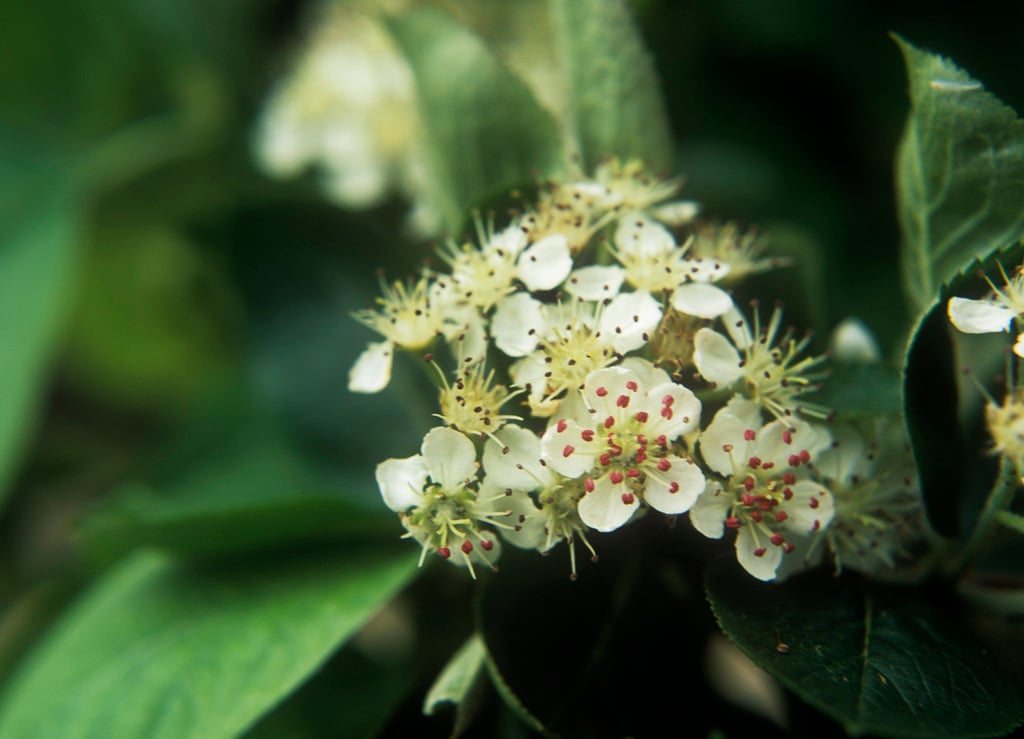
Aronia × prunifolia 'Nero' (F)

RHS Plant Profile
purple chokeberry 'Nero'
purple chokeberry 'Nero' RHS

Synonyms

Aronia melanocarpa 'Nero'

Shrubs

An upright, vase-shaped shrub to around 2.5m tall with dark green, glossy leaves 8-10cm long that turn purple-red in autumn. Large clusters of white flowers, each up to 1.5cm in diameter, are followed by spherical, purple-black fruits

Position

Full sun, Partial shade

Soil Types

Clay, Loam, Sand

Max Height

1.5-2.5 metres

Max Spread

1.5-2.5 metres

Size

Time to Maturity
5–10 years
Max Spread
1.5-2.5 metres
Max Height
1.5-2.5 metres

Growing Conditions

Clay Loam Sand
Moisture
Moist but well–drained
pH
Acid or Neutral

Position

Full sun Partial shade
Aspect
South–facing or North–facing or West–facing or East–facing
Exposure
Exposed or Sheltered
Hardiness
H7

Colour & Scent

Season Stem Flower Foliage Fruit
Spring
Summer
Autumn
Winter

Botanical Details

Family
Rosaceae
Native to GB/Ireland
No
Foliage
Deciduous
Habit
Suckering
Potentially harmful
The berries are edible, but bitter raw, and this tree is usually grown as an ornamental plant rather than to provide a crop of fruit in the UK
Genus
Aronia are deciduous shrubs with simple leaves that colour well in autumn, and clusters of small white, hawthorn-like flowers followed by black, red or purple berries. These berries are edible, but are very astringent when raw; they may attract birds
Name Status
Accepted
Horticultural Group
This genus produces fruit, but not necessarily edible fruit

How to Grow

Cultivation

Grow in any moist but well-drained soil (except shallow soil over chalk) in sun or partial shade

Propagation

Propagate by softwood cuttings in early summer, propagate by suckers when plants are dormant and pot up

Suggested planting locations and garden types

  • Cottage and informal garden
  • Wildlife gardens
  • Hedging and screens

Pests

Generally pest-free

Diseases

Generally disease-free