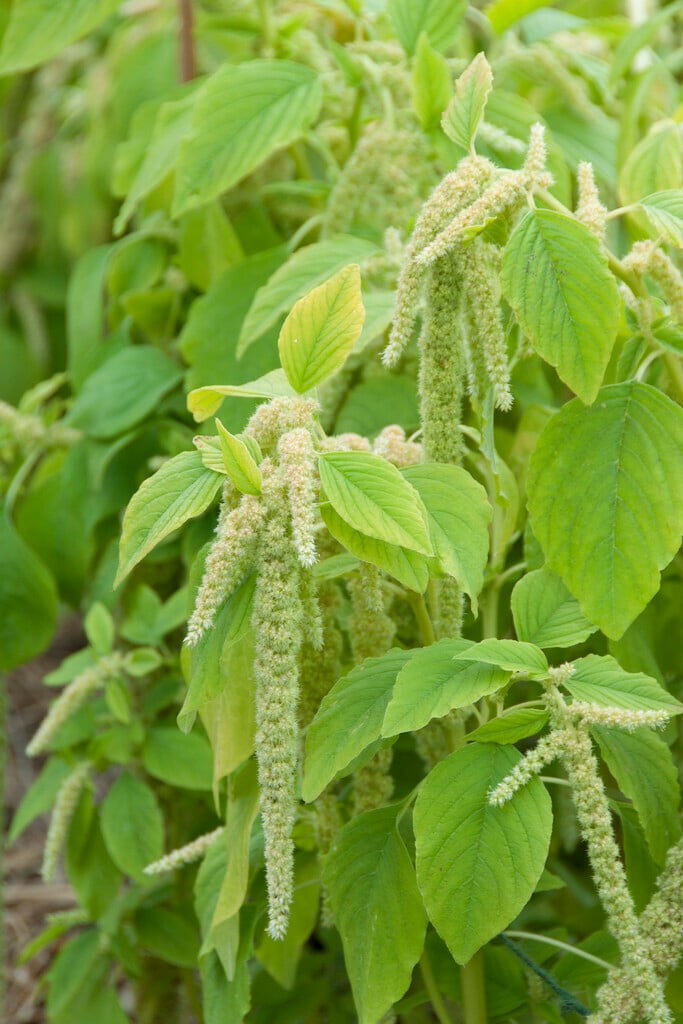
Amaranthus caudatus 'Viridis'

RHS Plant Profile
love-lies-bleeding 'Viridis'
love-lies-bleeding 'Viridis' visionspictures.com

Synonyms

Amaranthus caudatus 'Green Cascade'

Annual Biennial Bedding

A bushy annual, with large ovate leaves and drooping, light to lime green tassel-like racemes of tiny flowers in summer and autumn. The seedsheads provide food for birds. Large enough to make an architectural feature, the flowers can be used for fresh or dried arrangements

Position

Full sun

Soil Types

Chalk, Clay, Loam, Sand

Max Height

1-1.5 metres

Max Spread

0.5-1 metres

Size

Time to Maturity
1 year
Max Spread
0.5-1 metres
Max Height
1-1.5 metres

Growing Conditions

Chalk Clay Loam Sand
Moisture
Moist but well–drained or Well–drained
pH
Acid or Alkaline or Neutral

Position

Full sun
Aspect
South–facing or West–facing
Exposure
Sheltered
Hardiness
H2
Drought Resistance
Yes

Colour & Scent

Season Stem Flower Foliage Fruit
Spring
Summer
Autumn
Winter

Botanical Details

Family
Amaranthaceae
Native to GB/Ireland
No
Foliage
Deciduous
Habit
Bushy
Genus
Amaranthus can be upright or spreading annuals or short-lived perennials, with simple leaves and tiny flowers borne in dense, erect or pendulous, catkin-like inflorescences in summer and autumn
Name Status
Accepted

How to Grow

Cultivation

Seeds can be sown direct or started in pots or trays indoors. Pinch out the centre stem to encourage side branching. Grow in moist, fertile, humus-rich soil in full sun, in a sheltered site. Will tolerate poor soil, but then requires watering freely during dry periods in summer

Propagation

Propagate by seed

Suggested planting locations and garden types

  • Prairie planting
  • Wildlife gardens
  • Cottage and informal garden
  • Architectural
  • Cut flowers
  • Flower borders and beds

Pruning

Cut back after flowering

Pests

May be susceptible to aphids

Diseases

May be susceptible to a virus