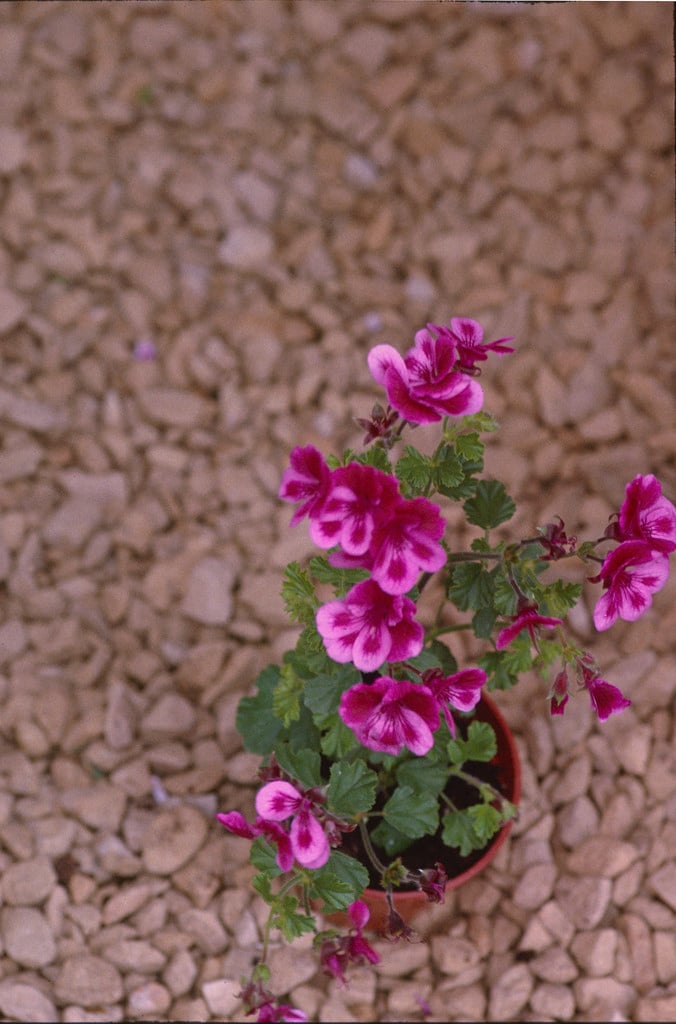
Pelargonium 'Cottenham Wonder' (A)

RHS Plant Profile
geranium 'Cottenham Wonder'
geranium 'Cottenham Wonder' RHS
Award of Garden Merit
Conservatory Greenhouse Bedding

Bears viola-shaped flowers in profusion during the growing season. The upper petals are cerise and the lower, pink splashed with cerise

Position

Full sun

Soil Types

Loam

Max Height

0.1-0.5 metres

Max Spread

0.1-0.5 metres

Size

Time to Maturity
1–2 years
Max Spread
0.1-0.5 metres
Max Height
0.1-0.5 metres

Growing Conditions

Loam
Moisture
Well–drained
pH
Alkaline or Neutral

Position

Full sun
Aspect
South–facing or West–facing or East–facing
Exposure
Sheltered
Hardiness
H1C

Colour & Scent

Season Stem Flower Foliage Fruit
Spring
Summer
Autumn
Winter

Botanical Details

Family
Geraniaceae
Native to GB/Ireland
No
Foliage
Evergreen
Habit
Bushy
Genus
Pelargonium can be perennials, sub-shrubs or shrubs, sometimes succulent and mostly evergreen, with palmately lobed or pinnately divided leaves and clusters of slightly irregular, 5-petalled flowers
Name Status
Accepted
Horticultural Group
Angel pelargoniums are compact, bushy perennials with small, rounded leaves, sometimes scented, and clusters of small single flowers in shades of pink, red purple or white

How to Grow

Cultivation

Requires frost-free conditions. Feed with a high potash fertiliser during the growing season to encourage flowering. See pelargonium cultivation

Propagation

Propagate by cuttings taken from non-flowering shoots in spring or summer

Suggested planting locations and garden types

  • Cottage and informal garden
  • Mediterranean climate plants
  • City and courtyard gardens
  • Patio and container plants

Pruning

Deadhead regularly

Pests

Generally pest-free, but may be susceptible to aphids

Diseases

Generally disease-free, but may be susceptible to pelargonium rust and pelargonium viruses