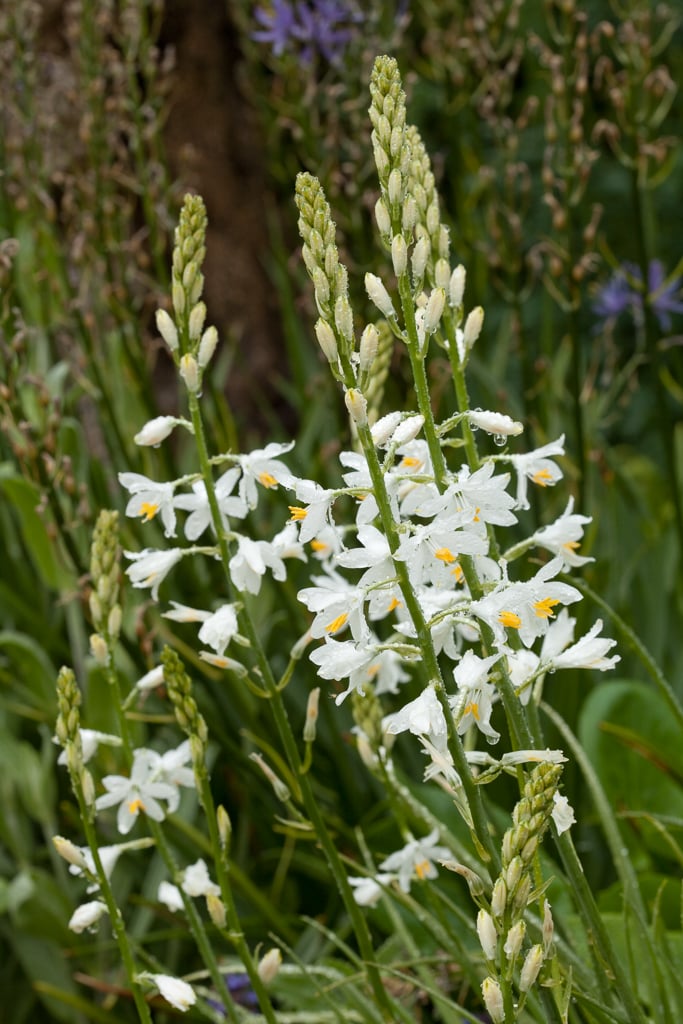
Anthericum liliago 'Major'

RHS Plant Profile
St Bernard's lily 'Major'
St Bernard's lily 'Major' John Fielding

Other common names

St Bernard's lily

Synonyms

Anthericum liliago var. major
Phalangium liliago var. major

Award of Garden Merit
Herbaceous Perennial

An erect herbaceous perennial with clumps of narrow grey-green leaves and trumpet-shaped white flowers 2-3cm in width, in narrow racemes

Position

Full sun

Soil Types

Chalk, Loam, Sand

Max Height

0.5-1 metres

Max Spread

0.1-0.5 metres

Size

Time to Maturity
2–5 years
Max Spread
0.1-0.5 metres
Max Height
0.5-1 metres

Growing Conditions

Chalk Loam Sand
Moisture
Moist but well–drained or Well–drained
pH
Acid or Alkaline or Neutral

Position

Full sun
Aspect
South–facing or West–facing or East–facing
Exposure
Exposed
Hardiness
H5

Colour & Scent

Season Stem Flower Foliage Fruit
Spring
Summer
Autumn
Winter

Botanical Details

Family
Asparagaceae
Native to GB/Ireland
No
Foliage
Deciduous
Habit
Columnar upright
Genus
Anthericum are deciduous fleshy-rooted perennials with linear basal leaves and erect stems bearing lax racemes or panicles of starry or trumpet-shaped flowers in spring or summer, followed by brown seed capsules
Name Status
Accepted

How to Grow

Cultivation

Ideally this should be grown in soil that is moist but well-drained in summer and well-drained over winter, this provides the fleshy roots with moisture in summer yet allows it to overwinter. Full sun is essential.

Propagation

Propagate by seed sown in pots in a cold frame in spring or autumn or propagate by division in spring

Suggested planting locations and garden types

  • Cottage and informal garden
  • Cut flowers
  • Flower borders and beds

Pruning

Seed spikes are attractive and can be left, but cut them back if you want to prevent self-seeding

Pests

May be susceptible to slugs and snails

Diseases

Generally disease-free