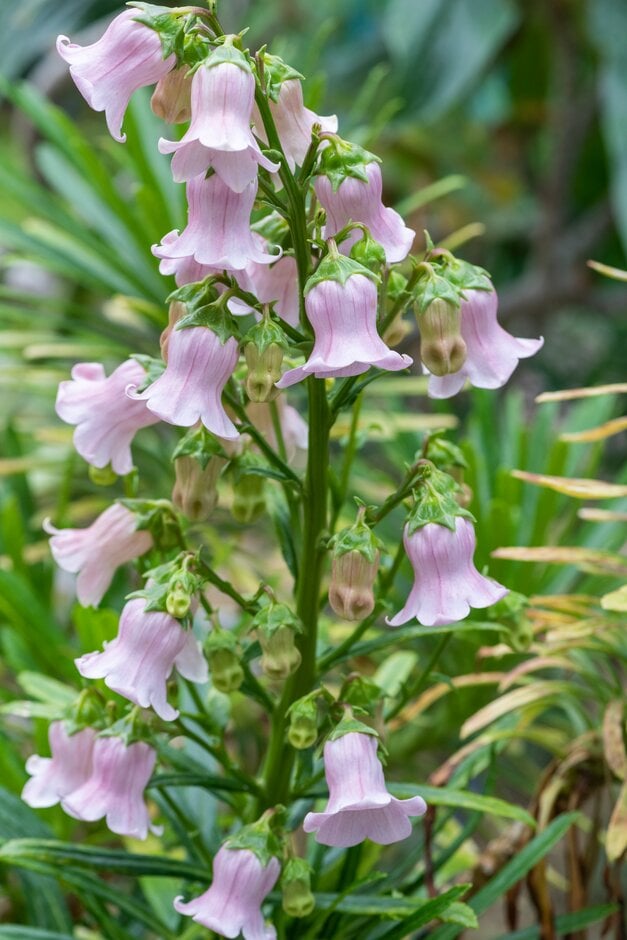
Azorina vidalii

RHS Plant Profile
Azores bellflower
Azores bellflower RHS / Lullingstone Castle.

Synonyms

Campanula vidalii

Climber Wall Shrub Conservatory Greenhouse Shrubs

A rare and unusual semi-succulent, upright shrub with glossy, rubber-like green foliage and large, waxy, bell-shaped pink and white flowers appearing in late summer. It can be grown outdoors in milder parts of the UK but is not frost tolerant so best grown in a sheltered location or in a conservatory or greenhouse in a cooler climate

Position

Full sun

Soil Types

Loam, Sand

Max Height

0.5-1 metres

Max Spread

0.1-0.5 metres

Size

Time to Maturity
2–5 years
Max Spread
0.1-0.5 metres
Max Height
0.5-1 metres

Growing Conditions

Loam Sand
Moisture
Well–drained
pH
Acid or Alkaline or Neutral

Position

Full sun
Aspect
South–facing or West–facing
Exposure
Sheltered
Hardiness
H2

Colour & Scent

Season Stem Flower Foliage Fruit
Spring
Summer
Autumn
Winter

Botanical Details

Family
Campanulaceae
Native to GB/Ireland
No
Foliage
Deciduous
Habit
Columnar upright
Genus
Azorina are shrubby plants with rather fleshy, sparsely branched stems bearing glossy, narrowly strap-shaped leaves and nodding bell-shaped flowers in terminal racemes in late summer
Name Status
Correct
Plant Range
Azores

How to Grow

Cultivation

Grow in moist, well-drained soil in full sun. May be placed outside in a sheltered location in warmer climates, but will not tolerate frost May be susceptible to rot in humid or wet conditions

Propagation

Propagate by seed in spring under glass. Seeds should germinate in around 2-4 weeks. Allow seedlings to grow on for at least their first winter under glass. Move outside when the danger of frost has passed.

Suggested planting locations and garden types

  • City and courtyard gardens
  • Cottage and informal garden
  • Houseplants
  • Conservatory and greenhouse
  • Flower borders and beds
  • Wall side borders

Pruning

No pruning required

Pests

Generally pest-free

Diseases

May be susceptible to cucumber mosaic virus