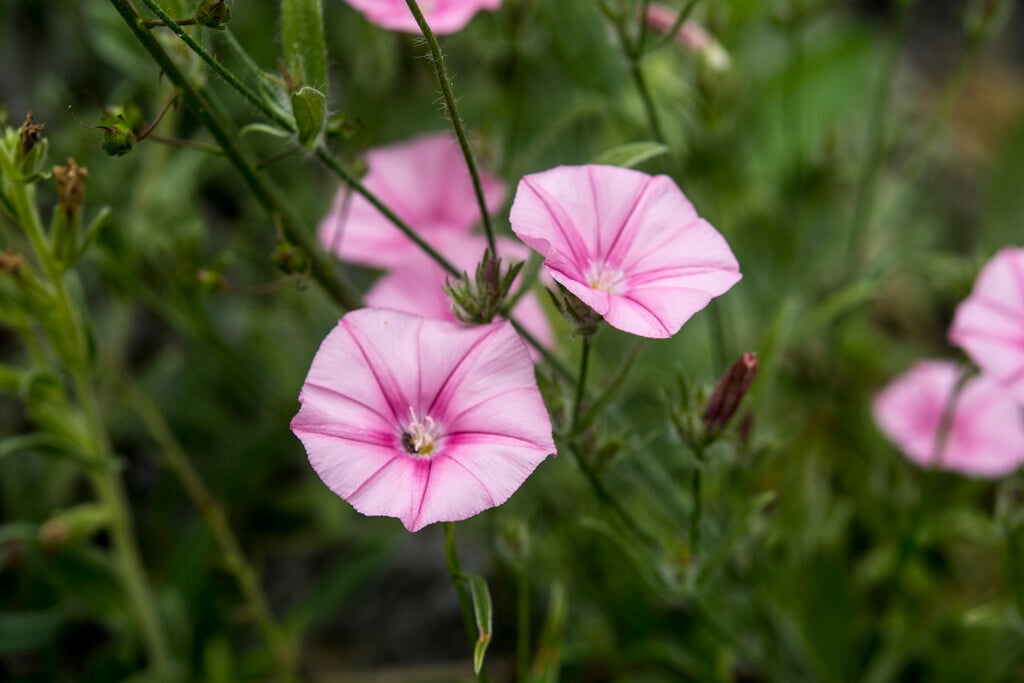
Convolvulus cantabrica

RHS Plant Profile
Cantabrian bindweed
Cantabrian bindweed visionspictures.com
Herbaceous Perennial

A woody-based, herbaceous perennial with fine, sprawling stems and small, narrow leaves, all with a sparse covering of silvery hairs. Pale pink flowers in summer startfunnel-shaped then open almost flat

Position

Full sun

Soil Types

Chalk, Loam, Sand

Max Height

0.1-0.5 metres

Max Spread

0.1-0.5 metres

Size

Time to Maturity
2–5 years
Max Spread
0.1-0.5 metres
Max Height
0.1-0.5 metres

Growing Conditions

Chalk Loam Sand
Moisture
Well–drained
pH
Alkaline or Neutral

Position

Full sun
Aspect
West–facing or South–facing
Exposure
Exposed or Sheltered
Hardiness
H4

Colour & Scent

Season Stem Flower Foliage Fruit
Spring
Summer
Autumn
Winter

Botanical Details

Family
Convolvulaceae
Native to GB/Ireland
No
Foliage
Deciduous
Habit
Trailing
Genus
Convolvulus can be annuals, perennials or shrubs, erect or scrambling, with simple or palmately divided leaves and solitary or clustered, open funnel-shaped flowers
Name Status
Correct
Plant Range
S Europe

How to Grow

Cultivation

Grow in reasonably fertile, well-drained neutral or alkaline soil in full sun

Propagation

Propagate by seed or softwood cuttings

Suggested planting locations and garden types

  • Patio and container plants
  • Rock garden
  • Cottage and informal garden
  • Flower borders and beds

Pruning

Trim as required

Pests

Generally pest-free

Diseases

May be susceptible to honey fungus (rarely)