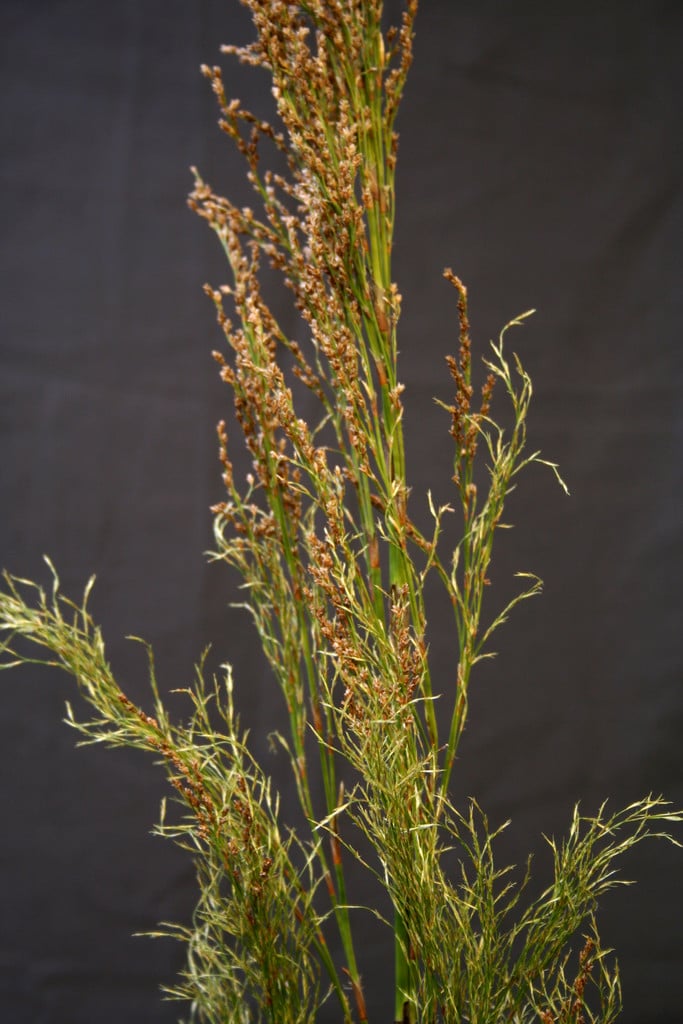
Restio paniculatus

RHS Plant Profile
paniculate restio
paniculate restio RHS

Synonyms

Calopsis paniculata
Leptocarpus paniculatus

Grass Like

A bushy, much-branched, evergreen, rhizomatous perennial, producing erect stems up to 2m in height and spreading up to 5m across. The stems are olive green with some purple spotting

Position

Full sun

Soil Types

Loam, Sand

Max Height

1.5-2.5 metres

Max Spread

4-8 metres

Size

Time to Maturity
2–5 years
Max Spread
4-8 metres
Max Height
1.5-2.5 metres

Growing Conditions

Loam Sand
Moisture
Moist but well–drained
pH
Acid

Position

Full sun
Aspect
West–facing or East–facing or South–facing
Exposure
Sheltered
Hardiness
H2

Colour & Scent

Season Stem Flower Foliage Fruit
Spring
Summer
Autumn
Winter

Botanical Details

Family
Restionaceae
Native to GB/Ireland
No
Foliage
Evergreen
Habit
Bushy
Genus
Restio is a genus of dioecious (with male and female flowers are borne on separate plants) perennials with a rhizome-creeping or tufted habit that superficially have a rush-like appearance. Leaves are reduced to persistent sheaths enclosing the bases of the flowering stems. Originating from Southern Africa and Australia
Name Status
Correct
Plant Range
SW Cape, S. Africa

How to Grow

Cultivation

Under glass, grow in a preferably acidic, peat-free, loam-based compost in full light. Water moderately when in growth during the spring summer and early autumn, sparingly at other times. Plants may be placed outside in the summer in frost-prone areas and brought back under cover in the autumn, where they should overwinter in cool temperatures and low atmospheric humidity

Propagation

Propagate by seed at 16-18°C after soaking for 24 hours in warm water. Divide rhizomes in early spring

Suggested planting locations and garden types

  • Patio and container plants
  • Sub-tropical

Pruning

Not usually required; old stems may be removed

Pests

May be susceptible to glasshouse red spider mite and glasshouse whitefly when grown under glass

Diseases

Generally disease-free