Trillium sessile

RHS Plant Profile
toadshade
toadshade RHS

Other common names

sessile trillium, wake robin

Herbaceous Perennial

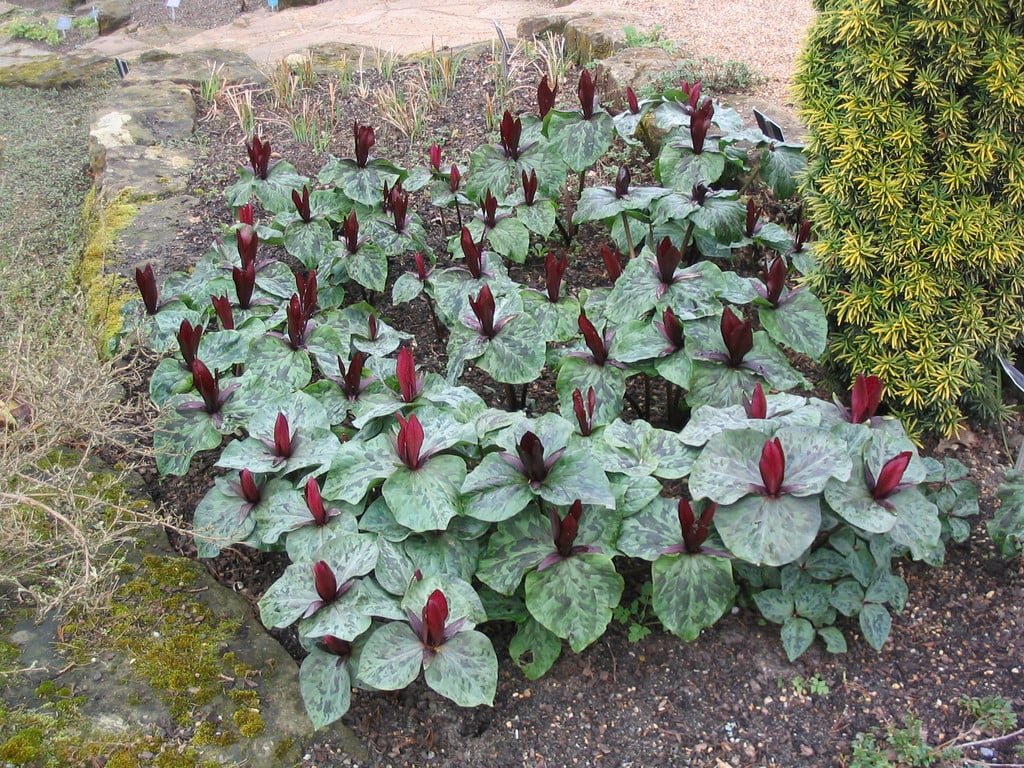
A perennial to 30cm, producing whorls of broad, stalkless, deep green leaves marked with pale, silvery green and bronze-maroon. Stalkless, upright, red-maroon flowers appear in the centre of the leaves in late spring

Position

Full shade, Partial shade

Soil Types

Loam, Sand

Max Height

0.1-0.5 metres

Max Spread

0.1-0.5 metres

Size

Time to Maturity
5–10 years
Max Spread
0.1-0.5 metres
Max Height
0.1-0.5 metres

Growing Conditions

Loam Sand
Moisture
Moist but well–drained
pH
Acid or Neutral

Position

Full shade Partial shade
Aspect
North–facing or East–facing or West–facing
Exposure
Sheltered
Hardiness
H5

Colour & Scent

Season Stem Flower Foliage Fruit
Spring
Summer
Autumn
Winter

Botanical Details

Family
Melanthiaceae
Native to GB/Ireland
No
Foliage
Deciduous
Habit
Columnar upright
Genus
Trillium are rhizomatous, herbaceous perennials with erect stems bearing a whorl of ovate or diamond-shaped leaves, with one or more erect or nodding flowers borne at the stem apex
Name Status
Correct
Plant Range
E & N USA

How to Grow

Cultivation

Grow in deep, moist but well-drained, humus-rich, preferably acid to neutral soil in deep or partial shade. Mulch in autumn with leaf mould. See trillium cultivation

Propagation

Propagate by seed in pots in a shady cold frame as soon as seed is ripe; takes 5-7 years to reach flowering size. Propagate rhizomes by division after flowering or cut out the growing point from the rhizome after flowering, which stimulates the formation of offsets

Suggested planting locations and garden types

  • City and courtyard gardens
  • Cottage and informal garden
  • Low Maintenance
  • Flower borders and beds
  • Underplanting of roses and shrubs
  • Banks and slopes

Pruning

No pruning required

Pests

May be susceptible to slugs and snails

Diseases

Generally disease-free