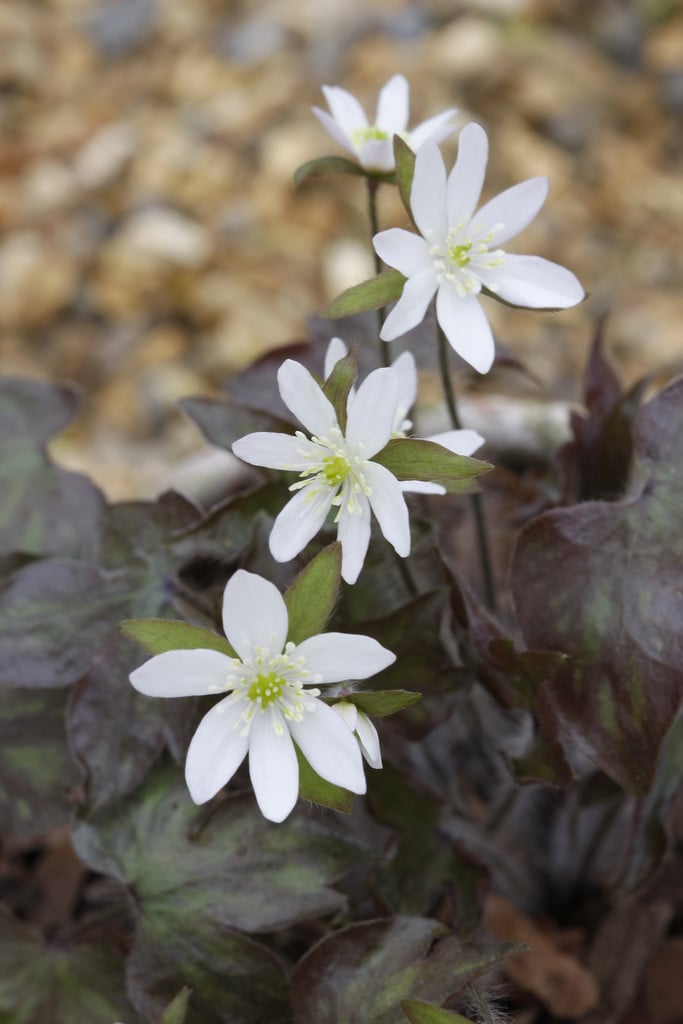
Hepatica acutiloba

RHS Plant Profile
sharp-lobed liverleaf
sharp-lobed liverleaf RHS

Synonyms

Anemone acutiloba

Award of Garden Merit
Alpine Rockery Herbaceous Perennial

A low, clump-forming, semi-evergreen perennial to 15cm tall. The rounded or kidney-shaped, occasionally marbled leaves up to 8cm long have deeply-cut, sharply pointed lobes and turn shades of russet red and deep purple in autumn. Bowl-shaped flowers are held erect on hairy stems and appear before or during the emergence of new foliage in the spring. Each flower is up to 2.5cm across and usually white but may be shaded pale pink or pale lavender-purple

Position

Partial shade

Soil Types

Chalk, Clay, Loam, Sand

Max Height

0.1-0.5 metres

Max Spread

0.1-0.5 metres

Size

Time to Maturity
2–5 years
Max Spread
0.1-0.5 metres
Max Height
0.1-0.5 metres

Growing Conditions

Chalk Clay Loam Sand
Moisture
Moist but well–drained
pH
Alkaline or Neutral

Position

Partial shade
Aspect
West–facing or South–facing or East–facing
Exposure
Exposed or Sheltered
Hardiness
H6

Colour & Scent

Season Stem Flower Foliage Fruit
Spring
Summer
Autumn
Winter

Botanical Details

Family
Ranunculaceae
Native to GB/Ireland
No
Foliage
Semi evergreen
Habit
Bushy, Clump forming
Genus
Hepatica are small, clump-forming perennials with 3 to 5-lobed, semi-evergreen leaves and anemone-like, blue, violet, pink or white flowers in early spring
Name Status
Correct
Plant Range
North America

How to Grow

Cultivation

Grows well in humus-rich soils and thrives in heavier soils; best in part-shade. Top dress annually in autumn with leaf mould. Resents root disturbance

Propagation

Propagate by seed sown in an open frame, as soon as ripe, or by division in spring. Transplants and divisions are slow to establish

Suggested planting locations and garden types

  • City and courtyard gardens
  • Cottage and informal garden
  • Patio and container plants
  • Rock garden
  • Flower borders and beds
  • Garden edging
  • Underplanting of roses and shrubs

Pruning

No pruning required

Pests

May be susceptible to slug and snail damage on young growth

Diseases

Generally disease-free