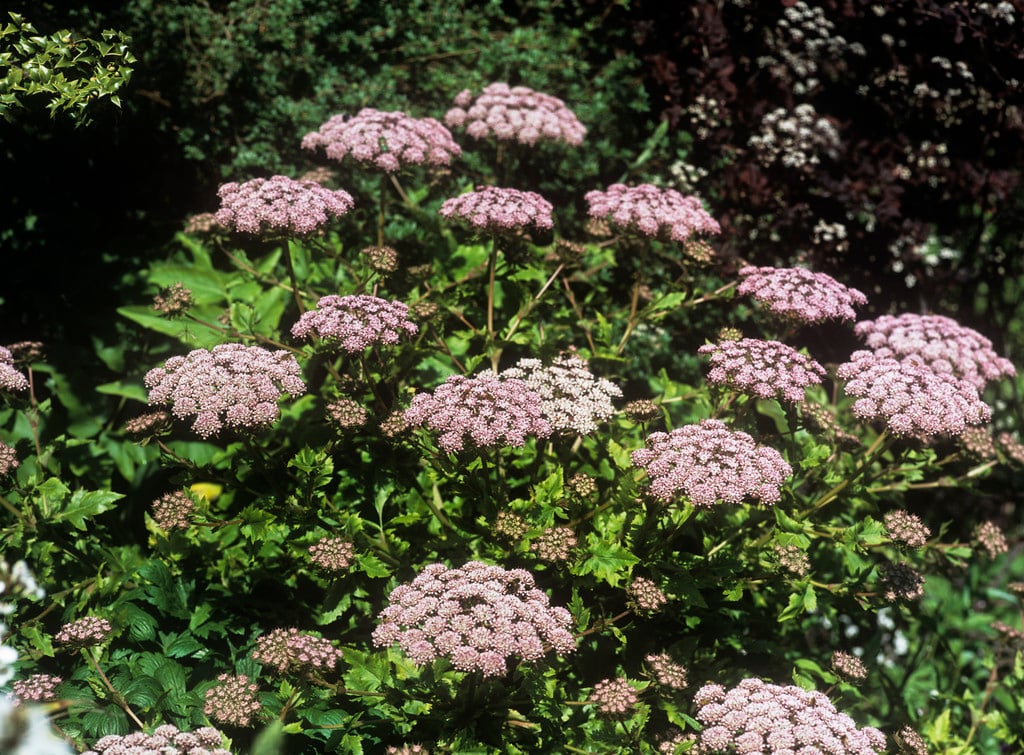
Melanoselinum decipiens

RHS Plant Profile
black parsley
black parsley RHS

Synonyms

Melanoselinum decipiens

Herbaceous Perennial

A tall, short-lived perennial producing a rosette of large, glossy, semi-evergreen, divided foliage atop one or more sturdy, ridged stems. After two or more years produces umbels of tiny, pale pink flowers, in late spring or early summer. The plant dies after flowering, but leaves a striking winter silhouette and often self-seeds

Position

Full sun, Partial shade

Soil Types

Chalk, Loam, Sand

Max Height

1.5-2.5 metres

Max Spread

1-1.5 metres

Size

Time to Maturity
2–5 years
Max Spread
1-1.5 metres
Max Height
1.5-2.5 metres

Growing Conditions

Chalk Loam Sand
Moisture
Moist but well–drained
pH
Acid or Alkaline or Neutral

Position

Full sun Partial shade
Aspect
South–facing or West–facing
Exposure
Sheltered
Hardiness
H3

Colour & Scent

Season Stem Flower Foliage Fruit
Spring
Summer
Autumn
Winter

Botanical Details

Family
Apiaceae
Native to GB/Ireland
No
Foliage
Semi evergreen
Habit
Bushy
Genus
Daucus are more commonly known as wild carrot, a group of herbaceous, biennial (although not always) plants which can reach a height of between 30 to 60cm. The triangular shaped leaves are tripinnate, divided and lacy and flowers begin in pink buds, opening into small and white clustered together in dense umbels. The fruit is small, hairy and lumpy.
Name Status
Synonym
Plant Range
Macaronesia

How to Grow

Cultivation

Grow in fertile, moist but well-drained soil in a warm, sheltered position in sun or semi-shade. Dislikes winter wet

Propagation

Propagate by seed

Suggested planting locations and garden types

  • Architectural
  • City and courtyard gardens
  • Cottage and informal garden
  • Sub-tropical
  • Mediterranean climate plants
  • Flower borders and beds

Pruning

No pruning required

Pests

Generally pest-free

Diseases

Generally disease-free