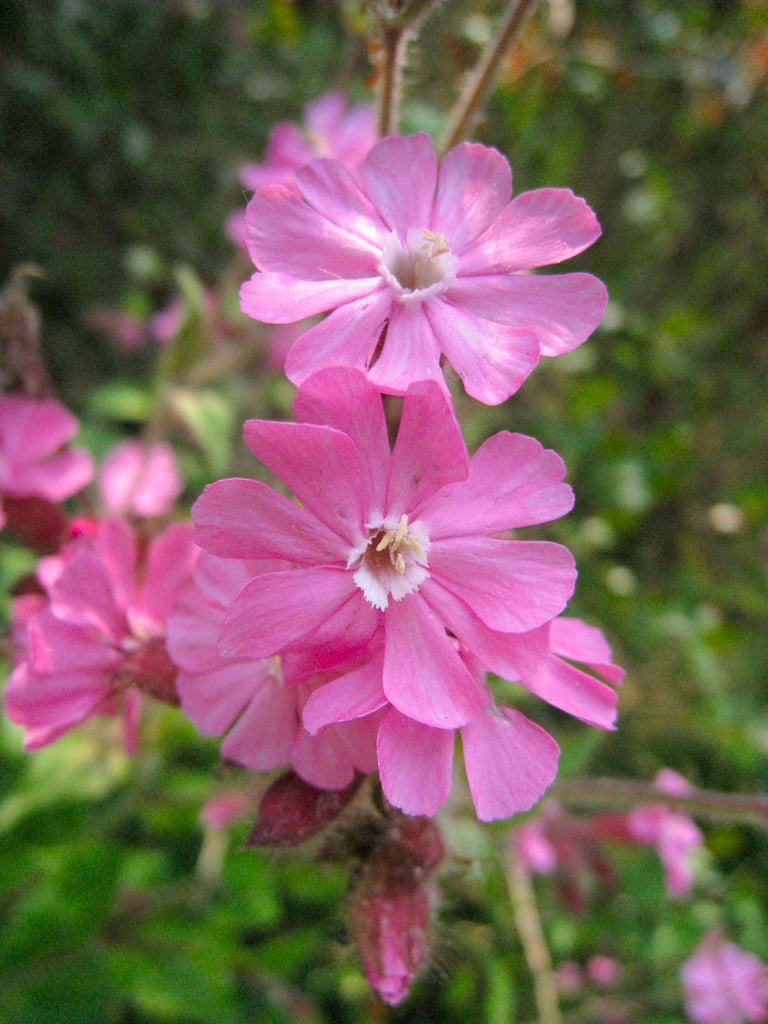
Lychnis viscaria

RHS Plant Profile
sticky catchfly
sticky catchfly RHS

Synonyms

Viscaria viscosa
Lychnis viscaria
Lychnis viscaria alpina
Silene viscaria

Herbaceous Perennial

A mat-forming to tufted perennial, to 45cm in height, with sticky stems bearing narrow, dark green leaves, and clusters of purplish-pink flowers, 2cm in width, in early and mid-summer

Position

Full sun, Partial shade

Soil Types

Clay, Loam

Max Height

0.1-0.5 metres

Max Spread

0.1-0.5 metres

Size

Time to Maturity
2–5 years
Max Spread
0.1-0.5 metres
Max Height
0.1-0.5 metres

Growing Conditions

Clay Loam
Moisture
Moist but well–drained or Well–drained
pH
Acid or Neutral or Alkaline

Position

Full sun Partial shade
Aspect
South–facing or East–facing or West–facing
Exposure
Exposed or Sheltered
Hardiness
H5

Colour & Scent

Season Stem Flower Foliage Fruit
Spring
Summer
Autumn
Winter

Botanical Details

Family
Caryophyllaceae
Native to GB/Ireland
Yes
Foliage
Deciduous
Habit
Clump forming, Matforming, Tufted
Genus
A genus of low-growing flowering plants with thin, ovate green foliage and clusters of pretty pink, white or purple flowers on sticky, upright stems. A deep taproot makes this a genus which can survive drought conditions
Name Status
Correct
Plant Range
Eurasia

How to Grow

Cultivation

Grow in moist fertile soil in sun or partial shade

Propagation

Propagate by division or basal cuttings in early spring

Suggested planting locations and garden types

  • Coastal
  • Cottage and informal garden
  • City and courtyard gardens
  • Wildflower meadow
  • Wildlife gardens
  • Low Maintenance
  • Flower borders and beds

Pruning

Deadhead to prolong flowering then cut down in autumn

Pests

May be susceptible to slugs and aphids

Diseases

Generally disease-free