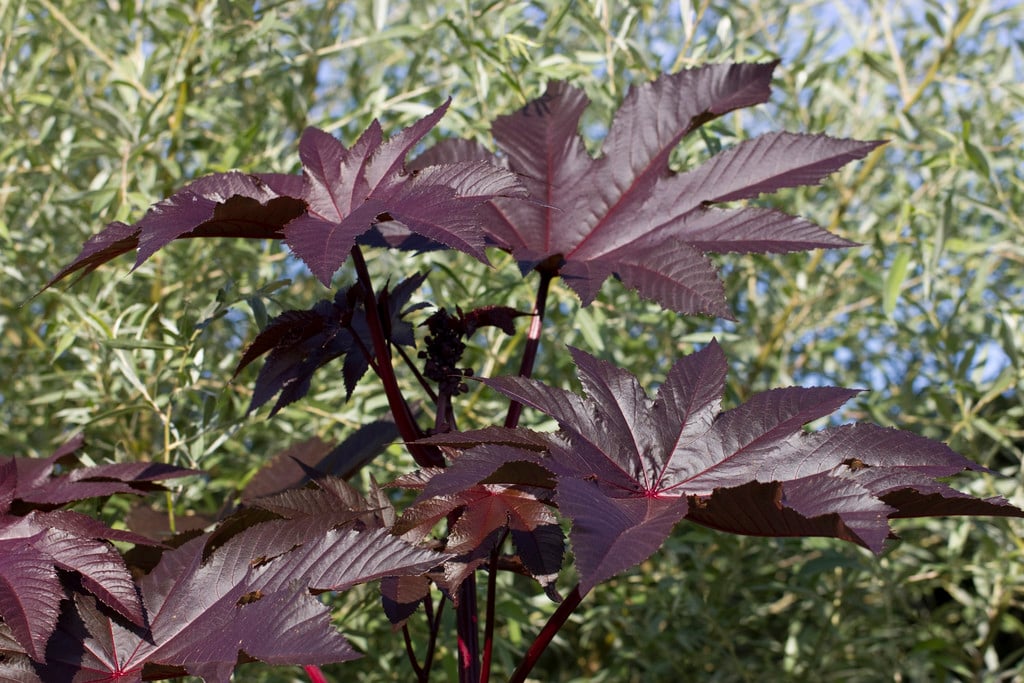
Ricinus communis 'New Zealand Black'

RHS Plant Profile
castor oil plant 'New Zealand Black'
castor oil plant 'New Zealand Black' RHS

Synonyms

Ricinus 'New Zealand Purple'

Bedding Shrubs

'New Zealand Black' is a large, tender, evergreen shrub grown as an annual in temperate climates. It has large, dark red-purple, palmately lobed leaves and showy red female flower spikes in summer, followed by dark red fruits with soft spines

Position

Full sun

Soil Types

Chalk, Loam, Sand

Max Height

1.5-2.5 metres

Max Spread

0.5-1 metres

Size

Time to Maturity
1 year
Max Spread
0.5-1 metres
Max Height
1.5-2.5 metres

Growing Conditions

Chalk Loam Sand
Moisture
Moist but well–drained or Well–drained
pH
Acid or Alkaline or Neutral

Position

Full sun
Aspect
South–facing or West–facing
Exposure
Sheltered
Hardiness
H2

Colour & Scent

Season Stem Flower Foliage Fruit
Spring
Summer
Autumn
Winter

Botanical Details

Family
Euphorbiaceae
Native to GB/Ireland
No
Foliage
Evergreen
Habit
Bushy
Potentially harmful
TOXIC if eatenwear gloves and other protective equipment when handling TOXIC to pets if eaten - see the HTA guide to potentially harmful plants for further information and useful contact numbers
Genus
Ricinus is a fast-growing evergreen shrub, often grown as an annual, with large, palmately lobed leaves and dense spikes of small flowers, followed by prickly seed capsules
Name Status
Unresolved

How to Grow

Cultivation

Grow in a peat-free, loam-based compost in full light. Water freely in growth and apply a balanced liquid fertiliser monthly. Plant outdoors when all danger of frost has passed. Stake plants in exposed positions. Plants grown on poorer soils tend to produce flowers at the expense of foliage

Propagation

Propagate by seed, sowing in late spring. Soak seed for 24 hours and sow singly in pots with bottom heat

Suggested planting locations and garden types

  • City and courtyard gardens
  • Patio and container plants
  • Architectural
  • Coastal
  • Cottage and informal garden
  • Sub-tropical
  • Flower borders and beds

Pruning

No pruning required

Pests

May be susceptible to glasshouse red spider mite

Diseases

May be susceptible to honey fungus (rarely)