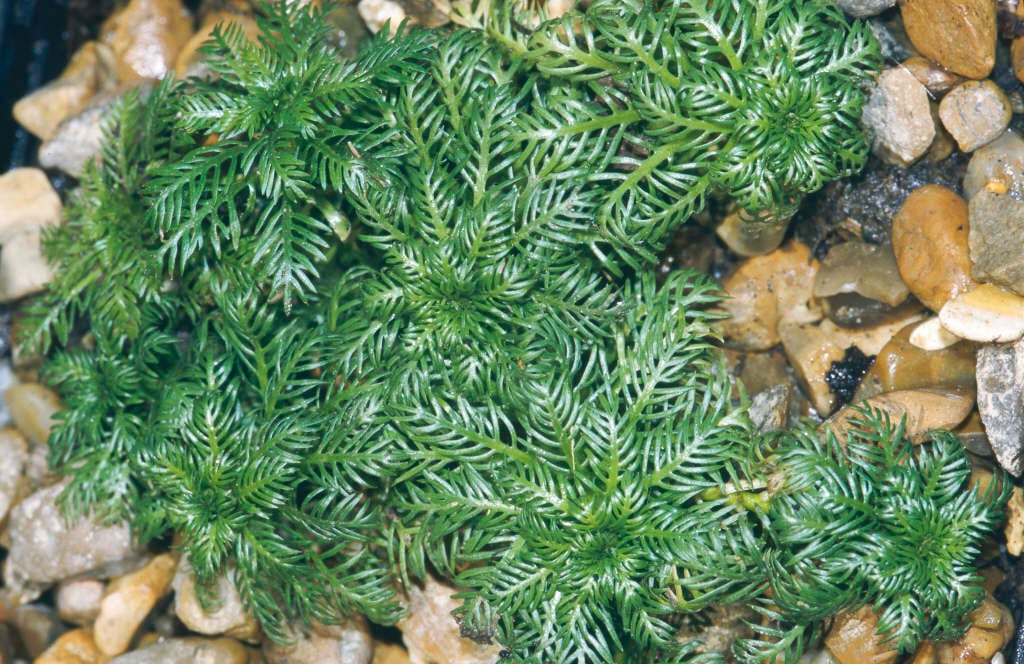
Hottonia palustris

RHS Plant Profile
water violet
water violet RHS 2002

Other common names

featherfoil, water featherfoil, water gilliflower, water milfoil, fioled y dŵr

Aquatic

An aquatic perennial with whorled, feathery submerged leaves and pale purple flowers held above the water in late spring

Position

Full sun

Soil Types

Clay, Loam, Sand

Max Height

0.1-0.5 metres

Max Spread

0.5-1 metres

Size

Time to Maturity
5–10 years
Max Spread
0.5-1 metres
Max Height
0.1-0.5 metres

Growing Conditions

Clay Loam Sand
Moisture
Poorly–drained
pH
Acid or Alkaline or Neutral

Position

Full sun
Aspect
South–facing or West–facing
Exposure
Exposed or Sheltered
Hardiness
H5

Colour & Scent

Season Stem Flower Foliage Fruit
Spring
Summer
Autumn
Winter

Botanical Details

Family
Primulaceae
Native to GB/Ireland
Yes
Foliage
Deciduous
Habit
Submerged
Genus
Hottonia are submerged aquatic perennials with finely pinnatisect leaves and erect stems bearing whorls of primula-like, lilac or white flowers in a terminal racemes
Name Status
Correct

How to Grow

Cultivation

Plant directly in the margins, or in baskets in a pool of clear, still or very slow moving water in full sun. Mature plants can grow in up to 60cm of water. A good oxygenator. See pond plants for further advice

Propagation

Propagate by division in spring or by seed; plants sometimes produce resting buds that sink to the bottom to overwinter, then produce new growth in spring

Suggested planting locations and garden types

  • Wildlife gardens
  • Low Maintenance

Pruning

No pruning required

Pests

May be susceptible to flase leaf-mining midge. Filamentous algae may smother foliage

Diseases

Generally disease-free