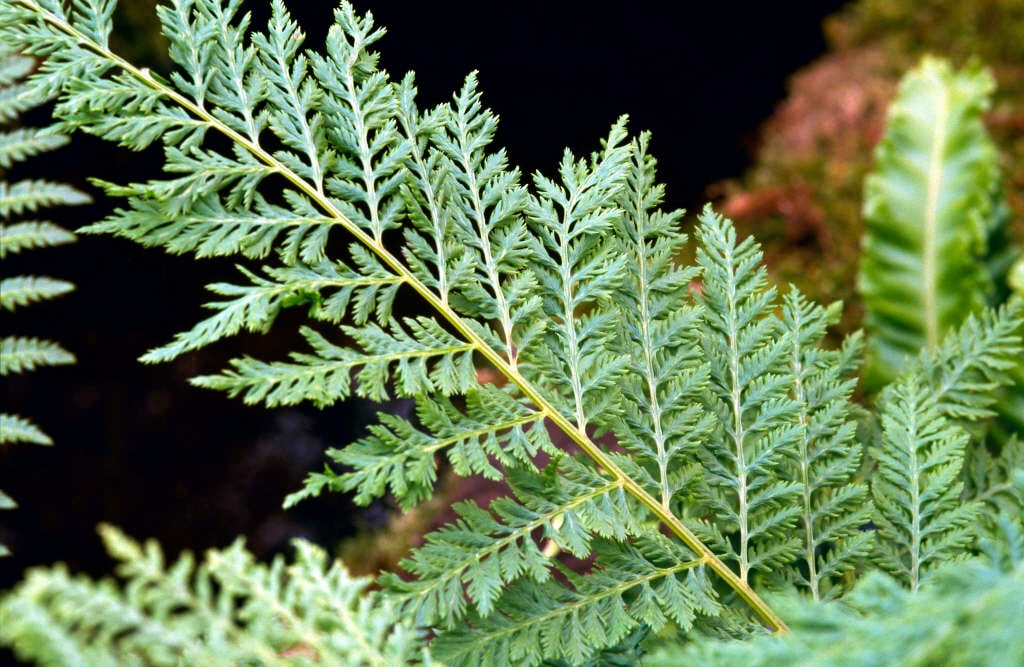
Athyrium filix-femina 'Vernoniae'

RHS Plant Profile
lady fern 'Vernoniae'
lady fern 'Vernoniae' RHS

Synonyms

Athyrium filix-femina Vernoniae Group

Award of Garden Merit
Ferns

A tufted fern forming a rosette of arching, narrowly ovate fronds with crispy, strongly-toothed, triangular or fan-shaped segments giving a lacy appearance

Position

Full shade, Partial shade

Soil Types

Clay, Loam, Sand

Max Height

0.1-0.5 metres

Max Spread

0.1-0.5 metres

Size

Time to Maturity
2–5 years
Max Spread
0.1-0.5 metres
Max Height
0.1-0.5 metres

Growing Conditions

Clay Loam Sand
Moisture
Moist but well–drained
pH
Acid or Neutral

Position

Full shade Partial shade
Aspect
North–facing or East–facing
Exposure
Sheltered
Hardiness
H6

Colour & Scent

Season Stem Flower Foliage Fruit
Spring
Summer
Autumn
Winter

Botanical Details

Family
Woodsiaceae
Native to GB/Ireland
No
Foliage
Deciduous
Habit
Bushy
Genus
Athyrium are deciduous ferns with erect or creeping rhizomes bearing usually pinnate to tripinnate fronds, often of thin texture, and they are especially shade-tolerant
Name Status
Accepted

How to Grow

Cultivation

Easy to grow in fertile, moist neutral to acid soil, enriched with leaf mould or garden compost in a sheltered shady site

Propagation

Propagate by sowing spores (one of the few lady fern cultivars to largely come true from spores) in mid to late summer or by division in spring

Suggested planting locations and garden types

  • Cottage and informal garden
  • Rock garden
  • City and courtyard gardens
  • Flower borders and beds

Pruning

Dead or damaged fronds may be removed as necessary

Pests

Generally pest-free outdoors

Diseases

Generally disease-free outdoors