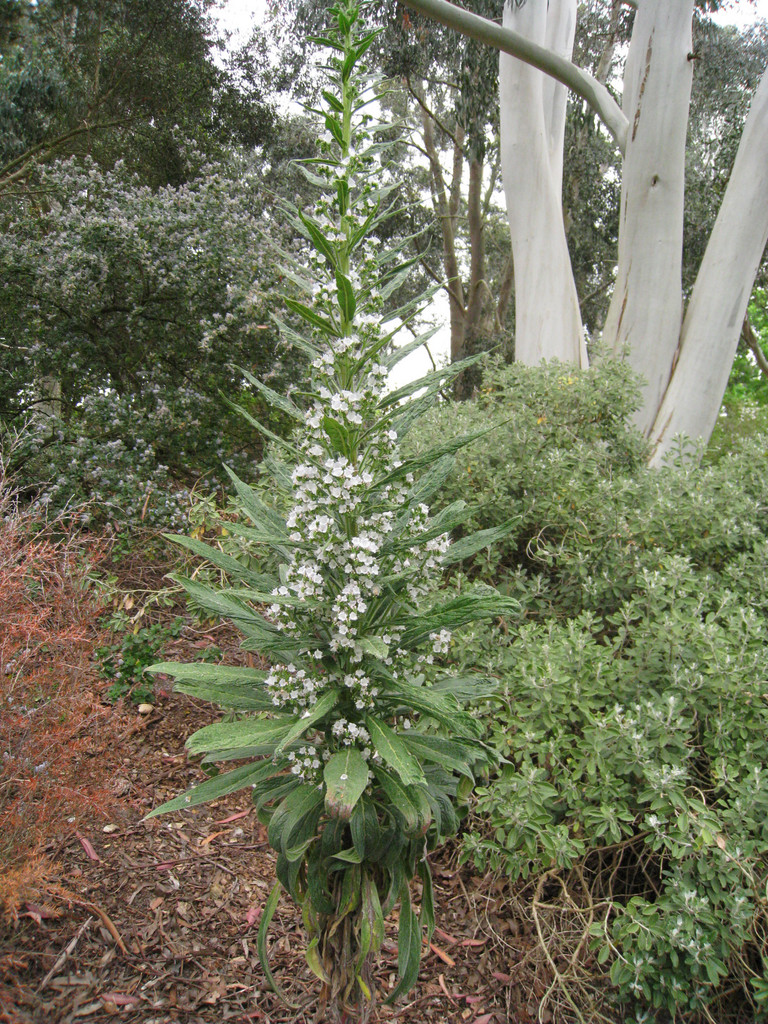
Echium 'Pink Fountain'

RHS Plant Profile
viper's bugloss 'Pink Fountain'
viper's bugloss 'Pink Fountain' RHS

Synonyms

Echium pininana 'Pink Fountain'

Award of Garden Merit
Annual Biennial

'Pink Fountain' is a rosette-forming biennial or short-lived perennial with lance-shaped, hairy, grey-green leaves. Each rosette of leaves produces a long, tapering spike, up to 4m high, of pink flowers in summer

Position

Full sun

Soil Types

Chalk, Loam, Sand

Max Height

2.5-4 metres

Max Spread

0.5-1 metres

Size

Time to Maturity
1–2 years
Max Spread
0.5-1 metres
Max Height
2.5-4 metres

Growing Conditions

Chalk Loam Sand
Moisture
Well–drained
pH
Acid or Alkaline or Neutral

Position

Full sun
Aspect
South–facing or West–facing
Exposure
Sheltered
Hardiness
H3

Colour & Scent

Season Stem Flower Foliage Fruit
Spring
Summer
Autumn
Winter

Botanical Details

Family
Boraginaceae
Native to GB/Ireland
No
Foliage
Evergreen
Habit
Columnar upright
Potentially harmful
Skin irritant. Wear gloves and other protective equipment when handling
Genus
Echium can be annuals, biennials, evergreen perennials or shrubs, with simple, coarsely hairy leaves and funnel-shaped flowers borne in panicles or dense spikes in summer
Name Status
Accepted

How to Grow

Cultivation

Under glass, grow in a peat-free, loam-based compost in full light. Water freely when in growth, sparingly in winter. Outdoors, grow in moderately fertile, well-drained soil in full sun. Protect from winter frost in situ with biodegradable horticultural fleece

Propagation

Propagate by seed sown at 13-16°C in summer, overwintering seedlings at 5-7°C

Suggested planting locations and garden types

  • Architectural
  • Coastal
  • Cottage and informal garden
  • Flower borders and beds
  • Wall side borders

Pruning

No pruning required

Pests

May be susceptible to slugs or glasshouse whitefly and glasshouse red spider mite under glass

Diseases

Generally disease-free