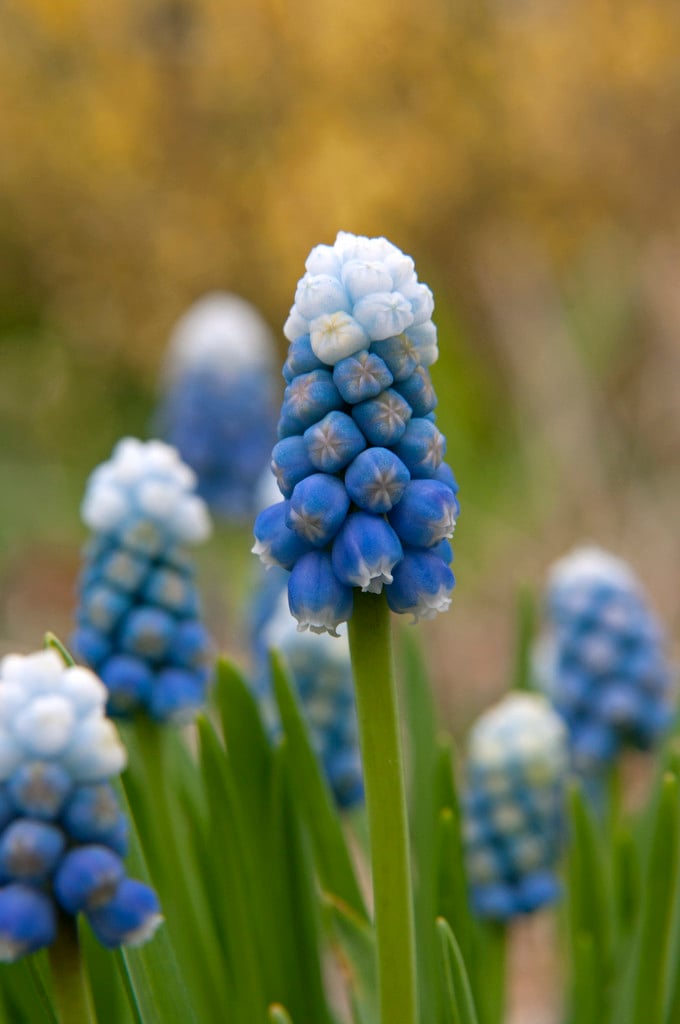
Muscari 'Mount Hood'

RHS Plant Profile
grape hyacinth 'Mount Hood'
grape hyacinth 'Mount Hood' RHS

Synonyms

Muscari aucheri 'Mount Hood'

Bulbs

'Mount Hood' is a deciduous, bulbous perennial, to 20cm tall, with green, strap-like leaves. Densely packed conical flower spikes are borne in spring and comprise tubular flowers coloured blue at the base and middle of the spike and white at the top

Position

Full sun, Partial shade

Soil Types

Chalk, Loam, Sand

Max Height

0.1-0.5 metres

Max Spread

0-0.1 metre

Size

Time to Maturity
2–5 years
Max Spread
0-0.1 metre
Max Height
0.1-0.5 metres

Growing Conditions

Chalk Loam Sand
Moisture
Moist but well–drained
pH
Acid or Alkaline or Neutral

Position

Full sun Partial shade
Aspect
South–facing or North–facing or West–facing or East–facing
Exposure
Exposed or Sheltered
Hardiness
H6

Colour & Scent

Season Stem Flower Foliage Fruit
Spring
Summer
Autumn
Winter

Botanical Details

Family
Asparagaceae
Native to GB/Ireland
No
Foliage
Deciduous
Habit
Bushy
Potentially harmful
Ornamental bulbs - not to be eaten. Wear gloves and other protective equipment when handling Pets: Ornamental bulbs - not to be eaten - see the HTA guide to potentially harmful plants for further information and useful contact numbers
Genus
Muscari are bulbous perennials with linear or strap-shaped leaves and small bell-shaped, tubular or urn-shaped flowers borne in a dense raceme on an erect leafless stem
Name Status
Accepted

How to Grow

Cultivation

Plant 10cm deep in groups, in moderately fertile, moist, but well drained soil in full sun. To retain vigour, lift congested clumps and divide when dormant in autumn

Propagation

Propagate from seed in containers in a cold frame in autumn. Divide clumps and plant divisions separately in summer

Suggested planting locations and garden types

  • Coastal
  • Gravel garden
  • Rock garden
  • City and courtyard gardens
  • Cottage and informal garden
  • Patio and container plants
  • Banks and slopes
  • Flower borders and beds

Pruning

Remove old flower stems and dead foliage in summer

Pests

Generally pest-free

Diseases

May be susceptible to fungal infections including anther smuts and bluebell rust (see rust diseases), and bacterial soft rot and some virus diseases