Vernonia lettermannii

RHS Plant Profile
narrowleaf ironweed
narrowleaf ironweed visionspictures.com
Herbaceous Perennial

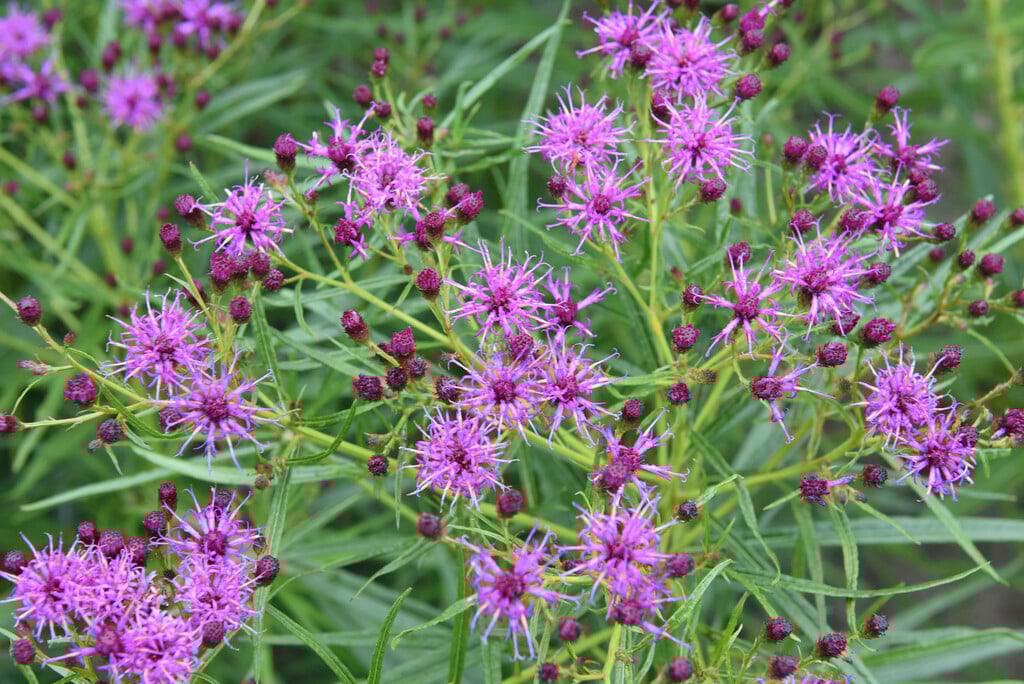
A clump-forming perennial with upright, smooth, leafy stems to 80cm high. Leaves are narrow and threadlike, to 9cm long but only 1-3mm wide. In late summer, flattened clusters of 10-12 small violet flowers are produced on branched stems above the foliage. Flowers are followed by grey-brown seedheads

Position

Full sun, Partial shade

Soil Types

Chalk, Clay, Loam, Sand

Max Height

0.5-1 metres

Max Spread

0.5-1 metres

Size

Time to Maturity
1–2 years
Max Spread
0.5-1 metres
Max Height
0.5-1 metres

Growing Conditions

Chalk Clay Loam Sand
Moisture
Moist but well–drained or Well–drained
pH
Acid or Alkaline or Neutral

Position

Full sun Partial shade
Aspect
East–facing or South–facing or West–facing
Exposure
Exposed or Sheltered
Hardiness
H7

Colour & Scent

Season Stem Flower Foliage Fruit
Spring
Summer
Autumn
Winter

Botanical Details

Family
Asteraceae
Native to GB/Ireland
No
Foliage
Deciduous
Habit
Clump forming
Genus
Vernonia are annuals, perennials, climbers, sub-shrubs, shrubs and trees, though only the perennials are in cultivation. They have upright stems, simple, stalkless leaves and flat branched heads of tubular purple or reddish pink, occasionally white, flowers
Name Status
Correct
Plant Range
USA (Arkansas, Oklahoma)

How to Grow

Cultivation

Grow in a light, moderately fertile, moist soil preferably in full sun but will tolerate partial shade

Propagation

Propagate by seed or by division; will self seed freely if not deadheaded

Suggested planting locations and garden types

  • Cottage and informal garden
  • Wildflower meadow
  • Banks and slopes
  • Flower borders and beds

Pruning

Deadhead to prolong flowering and, if necessary, to prevent self-seeding

Pests

Generally pest-free

Diseases

Generally disease-free