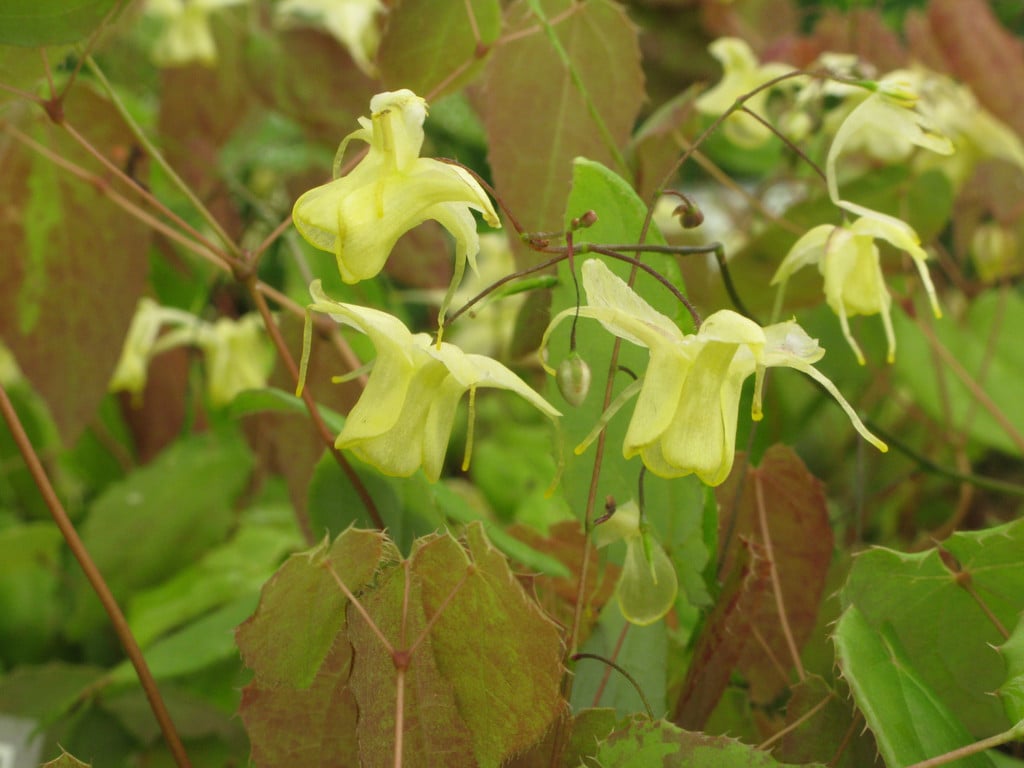
Epimedium 'Flowers of Sulphur'PBR

RHS Plant Profile
barrenwort 'Flowers of Sulphur'
barrenwort 'Flowers of Sulphur' RHS
Herbaceous Perennial

A vigorous clump-forming rhizomatous perennial 35cm high, with deciduous, glossy, pointed leaves, which emerge red-bronze with green veins in spring, mature to apple green, and flush copper bronze in autumn, and large flowers of pale yellow sepals and spurred yellow petals, from mid to late spring; Epimedium leaves may be used for their nests by leaf-cutting bees

Position

Partial shade

Soil Types

Chalk, Clay, Loam, Sand

Max Height

0.1-0.5 metres

Max Spread

0.1-0.5 metres

Size

Time to Maturity
2–5 years
Max Spread
0.1-0.5 metres
Max Height
0.1-0.5 metres

Growing Conditions

Chalk Clay Loam Sand
Moisture
Moist but well–drained
pH
Acid or Alkaline or Neutral

Position

Partial shade
Aspect
West–facing or East–facing or South–facing or North–facing
Exposure
Sheltered
Hardiness
H6

Colour & Scent

Season Stem Flower Foliage Fruit
Spring
Summer
Autumn
Winter

Botanical Details

Family
Berberidaceae
Native to GB/Ireland
No
Foliage
Deciduous
Habit
Clump forming
Genus
Epimedium are rhizomatous perennials with evergreen or deciduous, ternately or pinnately divided leaves, and open sprays of small, bowl-shaped flowers, often with prominent spurs, in mid to late spring
Name Status
Accepted

How to Grow

Cultivation

Grow in fertile, humus-rich, moist but well-drained soil in partial shade, with shelter from cold, drying winds; where frosts are prolonged or severe, spread an organic mulch such as leaf mould or composted bark to protect plants over winter

Propagation

Propagate by division in autumn or after flowering; or by root cuttings of rhizomes, kept under glass in winter, and planted out after all danger of frost has passed; propagation for resale is prohibited without a licence

Suggested planting locations and garden types

  • City and courtyard gardens
  • Cottage and informal garden
  • Low Maintenance
  • Garden edging
  • Underplanting of roses and shrubs
  • Banks and slopes
  • Flower borders and beds
  • Ground cover

Pruning

No pruning required, but cutting back in late winter or early spring, before flower spikes form, will improve appearance

Pests

May be susceptible to vine weevil

Diseases

May be susceptible to mosaic virus diseases and fungal leaf spots