Not the plant you're looking for? Search over 300,000 plants
Herbaceous Perennial
Size
Ultimate height
0.1–0.5 metresTime to ultimate height
2–5 yearsUltimate spread
0.5–1 metresGrowing conditions
Loam
Clay
Chalk
Moisture
Moist but well–drained, Well–drainedpH
Neutral, AlkalineColour & scent
| Stem | Flower | Foliage | Fruit | |
| Spring | White | Green Grey Silver | ||
|---|---|---|---|---|
| Summer | White | Green Grey Silver | ||
| Autumn | Green Grey Silver | |||
| Winter |
Position
- Full shade
- Partial shade
Aspect
West–facing or East–facing or North–facing
Exposure
Sheltered Hardiness
H5Botanical details
- Family
- Papaveraceae
- Native to GB / Ireland
- No
- Foliage
- Deciduous
- Habit
- Clump forming
- Genus
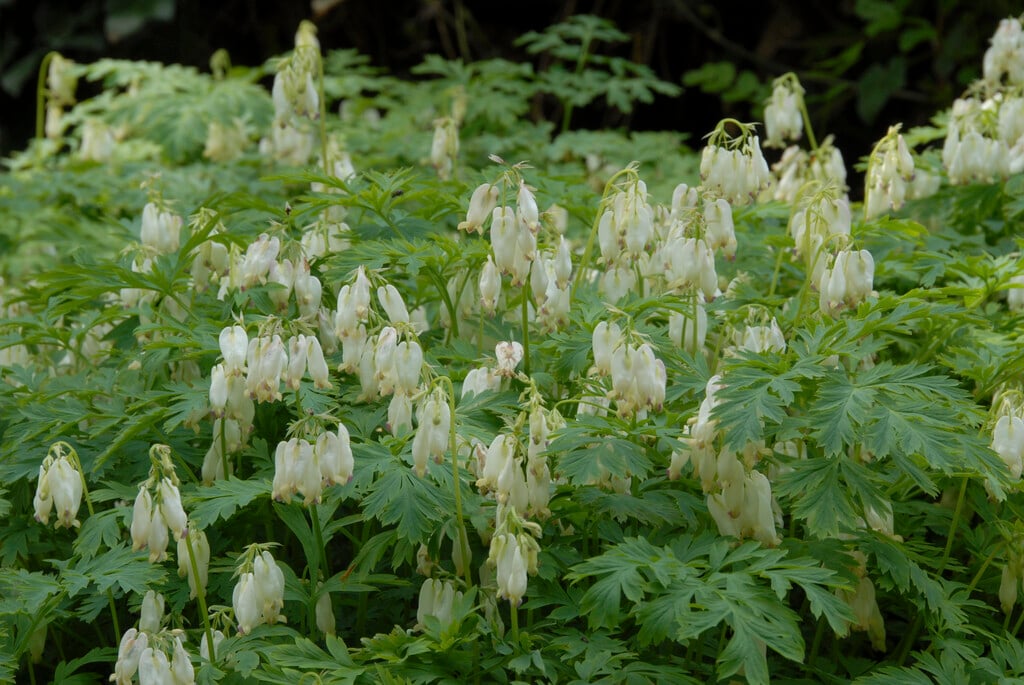
Dicentra can be rhizomatous or tuberous perennials with attractively divided leaves and pendent, heart-shaped flowers, usually in arching panicles or racemes
- Name status
Correct
How to grow
Cultivation
Plant in moist, fertile, humus-rich soil. Best in neutral or slightly alkaline soil, in part shade in a sheltered position
Propagation
Propagate by division or root cuttings
Suggested planting locations and garden types
- Cottage and informal garden
- Flower borders and beds
- Underplanting of roses and shrubs
Pruning
Generally not required
Pests
Diseases
Generally disease-free
Get involved
The Royal Horticultural Society is the UK’s leading gardening charity. We aim to enrich everyone’s life through plants, and make the UK a greener and more beautiful place.
