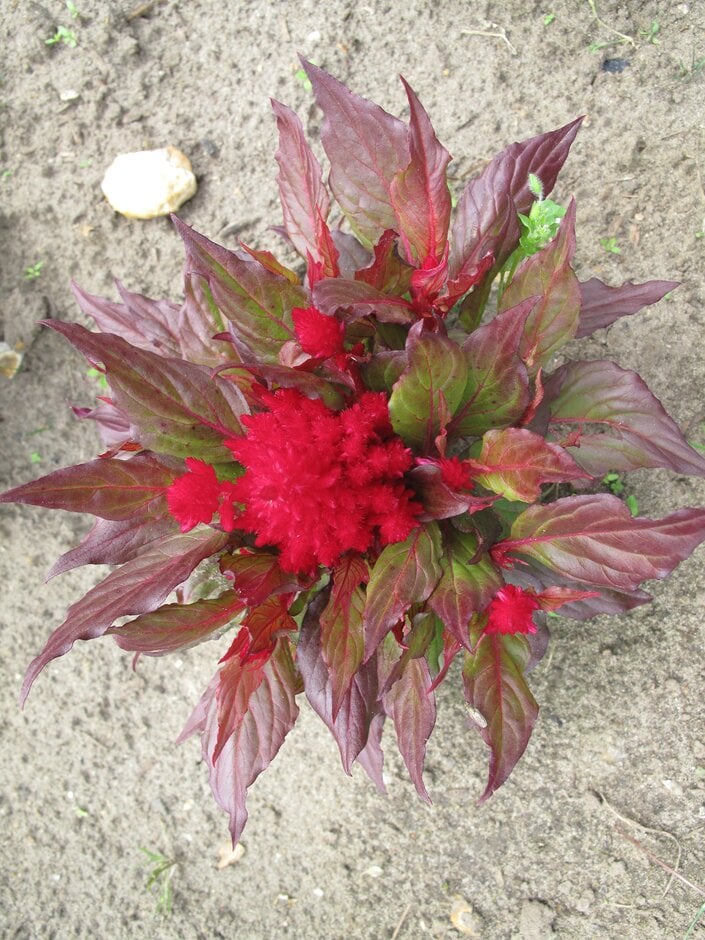
Celosia argentea var. cristata (Plumosa Group) 'Kimono Red' (Kimono Series)

RHS Plant Profile
cockscomb 'Kimono Red'
cockscomb 'Kimono Red' RHS

Synonyms

Celosia argentea 'Red' (Kimono Series)

Annual Biennial

A low growing, bushy cultivar of this upright perennial, usually grown as an annual. Leaves are mid-green to bronze, with dark red veins and stems. Produces feathery plumes of bright red flowers from summer until early autumn

Position

Full sun

Soil Types

Chalk, Loam, Sand

Max Height

0.1-0.5 metres

Max Spread

0.1-0.5 metres

Size

Time to Maturity
1 year
Max Spread
0.1-0.5 metres
Max Height
0.1-0.5 metres

Growing Conditions

Chalk Loam Sand
Moisture
Moist but well–drained or Well–drained
pH
Acid or Alkaline or Neutral

Position

Full sun
Aspect
South–facing or West–facing
Exposure
Sheltered
Hardiness
H2

Colour & Scent

Season Stem Flower Foliage Fruit
Spring
Summer
Autumn
Winter

Botanical Details

Family
Amaranthaceae
Native to GB/Ireland
No
Foliage
Deciduous
Habit
Bushy
Genus
Celosia can be annuals, perennials or shrubs, with simple or lobed, alternate leaves and tiny, brightly coloured flowers in large, plume-like inflorescences. Many garden selections are closely related to C. argentea
Name Status
Unresolved

How to Grow

Cultivation

Can be grown in a greenhouse or conservatory, or outside once all risk of frosts have passed. Indoors, grow in peat-free, loam-based potting compost in full light with good ventilation. Outdoors, plant in fertile soil in full sun in a sheltered position. Apply a balanced liquid fertiliser every two weeks

Propagation

Propagate by seed sown at 18ºC (64ºF) from early to late spring

Suggested planting locations and garden types

  • City and courtyard gardens
  • Cottage and informal garden
  • Patio and container plants
  • Conservatory and greenhouse
  • Flower borders and beds

Pruning

No pruning required

Pests

May be susceptible to aphids, glasshouse red spider mite and glasshouse whitefly

Diseases

May be susceptible to foot and root rot, and fungal leaf spot diseases