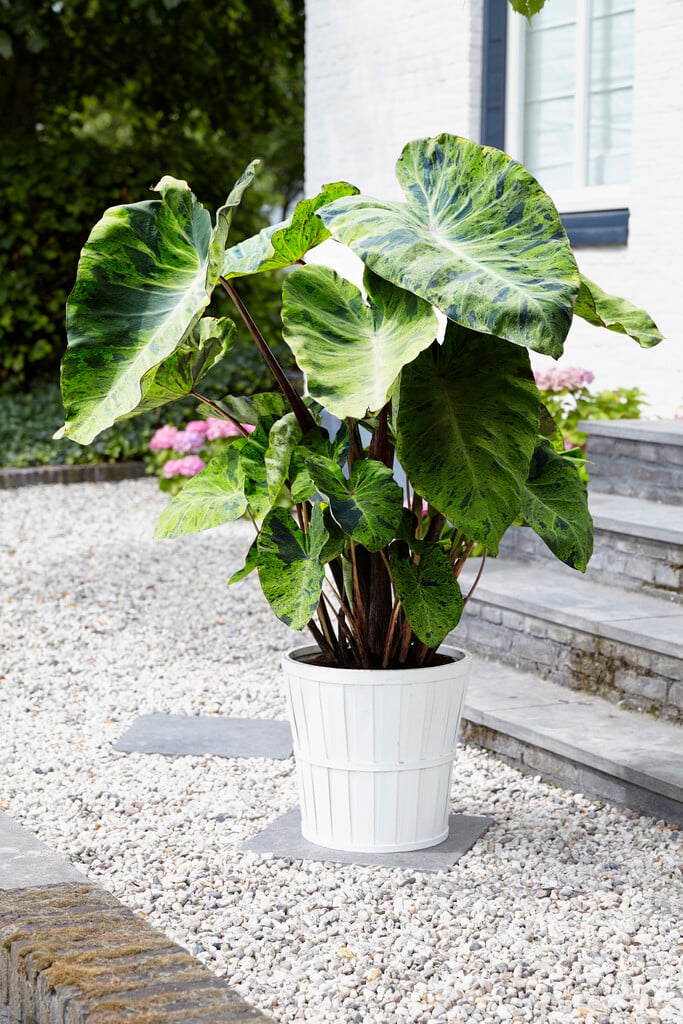
Colocasia esculenta 'Mojito' (v)

RHS Plant Profile
taro 'Mojito'
Conservatory Greenhouse

A frost-tender, tuberous perennial, 1m tall, bearing large, heart-shaped leaves. The foliage is light green, mottled and splashed with dark purple, and the leaf stalks are similarly marked. A striking summer foliage plant

Position

Full sun, Partial shade

Soil Types

Loam, Sand

Max Height

1-1.5 metres

Max Spread

0.5-1 metres

Size

Time to Maturity
2–5 years
Max Spread
0.5-1 metres
Max Height
1-1.5 metres

Growing Conditions

Loam Sand
Moisture
Moist but well–drained
pH
Acid or Alkaline or Neutral

Position

Full sun Partial shade
Aspect
East–facing or South–facing or West–facing
Exposure
Sheltered
Hardiness
H1B

Colour & Scent

Season Stem Flower Foliage Fruit
Spring
Summer
Autumn
Winter

Botanical Details

Family
Araceae
Native to GB/Ireland
No
Foliage
Deciduous
Habit
Clump forming, Columnar upright
Potentially harmful
Humans/Pets: Harmful if eatenskin/eye irritant. Wear gloves and other protective equipment when handling For further information and contact numbers regarding pets, see the HTA guide to potentially harmful plants
Genus
Colocasia can be deciduous or evergreen, tuberous-rooted perennials with arrow-shaped or rounded leaves, often prominently veined; flowers are minute, on a spadix held within a small white spathe, but are seldom produced in cultivation
Name Status
Accepted

How to Grow

Cultivation

Plant tubers in a large pot of humus-rich compost in warm conditions in early spring. In early summer the pot can be positioned in a sunny or lightly shaded spot outdoors, with shelter from strong winds. Water freely when the plant comes into growth and apply a high nitrogen feed weekly. Either move the pot into a greenhouse or conservatory over winter, or lift the tuber and store it dry

Propagation

Propagate by division of rhizomes

Suggested planting locations and garden types

  • Patio and container plants
  • Sub-tropical
  • Bedding
  • Conservatory and greenhouse

Pruning

No pruning required

Pests

May be susceptible to glasshouse red spider mite, aphids and glasshouse whitefly

Diseases

Generally disease-free