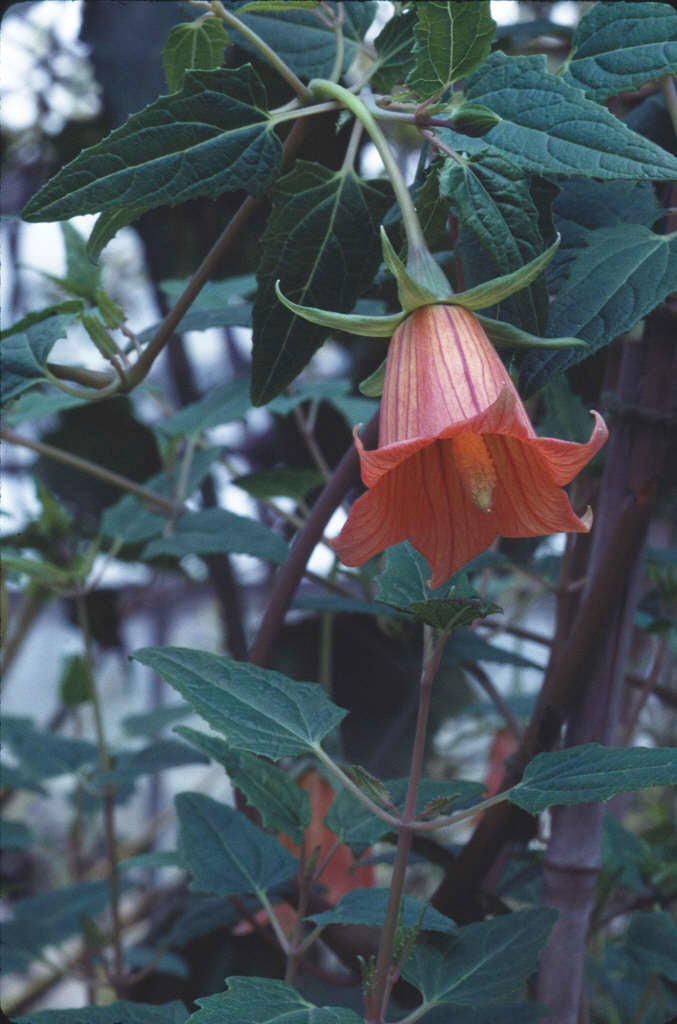
Canarina canariensis

RHS Plant Profile
Canary Island bellflower
Canary Island bellflower RHS 1988

Synonyms

Canarina campanula

Award of Garden Merit
Climber Wall Shrub Herbaceous Perennial

A tuberous perennial with scrambling stems bearing lance-shaped leaves and pendent bell-shaped, attractively veined deep orange-red flowers

Position

Partial shade

Soil Types

Loam, Sand

Max Height

1-1.5 metres

Max Spread

0.1-0.5 metres

Size

Time to Maturity
2–5 years
Max Spread
0.1-0.5 metres
Max Height
1-1.5 metres

Growing Conditions

Loam Sand
Moisture
Well–drained
pH
Acid or Alkaline or Neutral

Position

Partial shade
Aspect
South–facing or East–facing
Exposure
Sheltered
Hardiness
H2

Colour & Scent

Season Stem Flower Foliage Fruit
Spring
Summer
Autumn
Winter

Botanical Details

Family
Campanulaceae
Native to GB/Ireland
No
Foliage
Deciduous
Habit
Climbing
Genus
Canarina are twining tuberous herbaceous perennials with simple leaves and one or more nodding bell-shaped flowers with 6 lobes
Name Status
Correct
Plant Range
Canary Islands

How to Grow

Cultivation

Under glass grow in peat-free, loam-based potting compost in bright filtered light with good ventilation. Water freely when in growth and keep completely dry when foliage yellows in late spring. Apply a balanced liquid fertiliser monthly when in growth. Pot on when dormant

Propagation

Propagate by seed at 15-18°C in spring

Suggested planting locations and garden types

  • Cottage and informal garden
  • Patio and container plants
  • Wall side borders

Pruning

No pruning required

Pests

May be susceptible to glasshouse whitefly and glasshouse red spider mite

Diseases

Generally disease-free