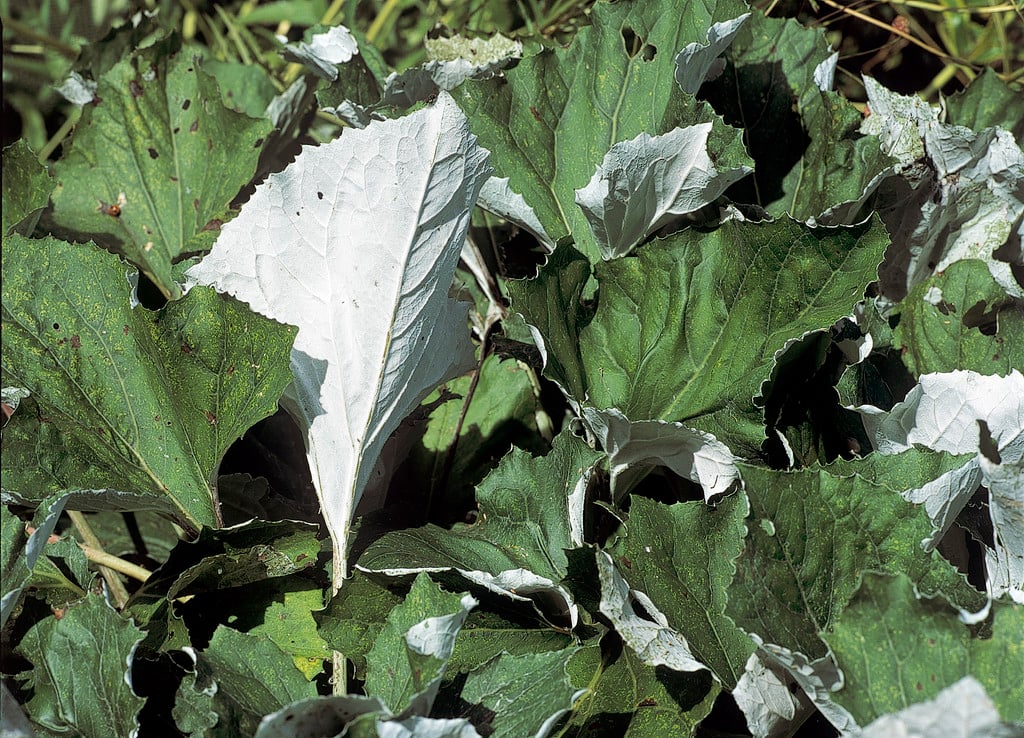
Petasites paradoxus

<em>Petasites</em> <em>paradoxus</em> RHS

Synonyms

Petasites niveus

Herbaceous Perennial

A rhizomatous perennial with large, dark green, broadly triangular leaves felted white on the back and greyish on the front when young. Stout, upright, dark pink flower stems appear in late winter as the leaves emerge, supporting a dense spike of tufted, scented, white or pale pink flowers

Position

Full sun, Partial shade

Soil Types

Chalk, Clay, Loam, Sand

Max Height

0.5-1 metres

Max Spread

0.5-1 metres

Size

Time to Maturity
2–5 years
Max Spread
0.5-1 metres
Max Height
0.5-1 metres

Growing Conditions

Chalk Clay Loam Sand
Moisture
Moist but well–drained
pH
Acid or Alkaline or Neutral

Position

Full sun Partial shade
Aspect
North–facing or South–facing or West–facing or East–facing
Exposure
Exposed or Sheltered
Hardiness
H6

Colour & Scent

Fragrance Flower
Season Stem Flower Foliage Fruit
Spring
Summer
Autumn
Winter

Botanical Details

Family
Asteraceae
Native to GB/Ireland
No
Foliage
Deciduous
Habit
Bushy
Genus
Petasites are perennial plants, usually large, with thick rhizomes or stems. Leaves are often very large and either heart-shaped or kidney-shaded. Scapes or stems many-headed, with any leaves usually reduced to scales. Flowers dioecious in usually rayless heads, purple or white, rarely yellowish, borne in panicles or racemes at the ends of the scapes
Name Status
Correct

How to Grow

Cultivation

Grow in moist but well-drained soil in sun or semi-shade. Not invasive

Propagation

Divide in spring

Suggested planting locations and garden types

  • Cottage and informal garden
  • Wildlife gardens
  • Low Maintenance
  • Ground cover
  • Banks and slopes
  • Flower borders and beds

Pruning

Remove the old foliage before the onset of new growth in late winter

Pests

Generally pest-free

Diseases

Generally disease-free