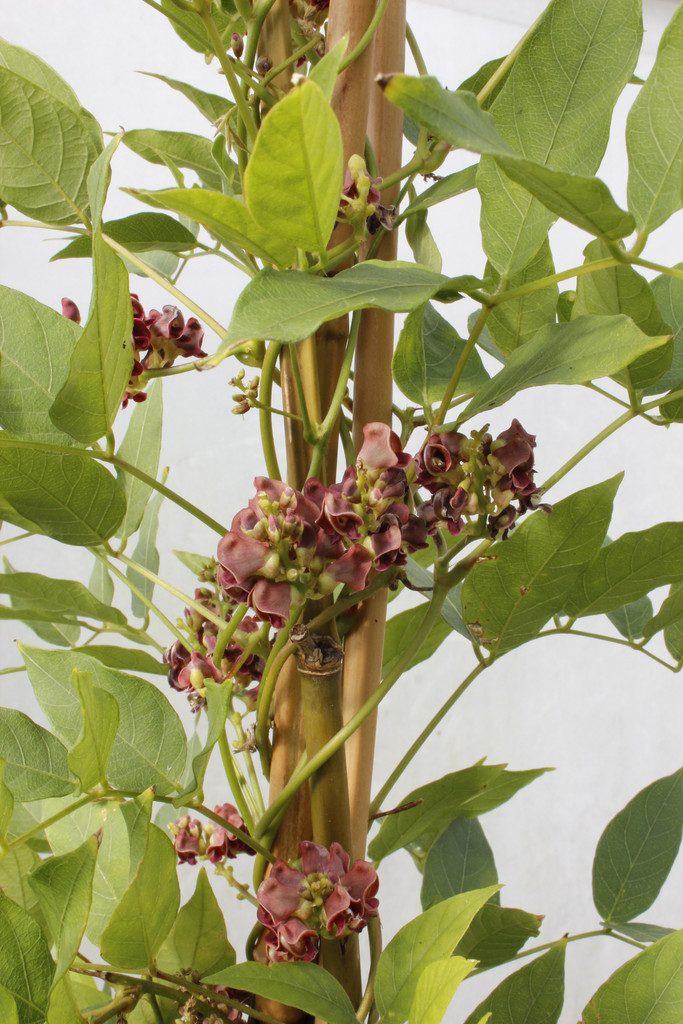
Apios americana

RHS Plant Profile
potato bean
potato bean RHS

Other common names

ground nut, ground pen, Indian potato, mic-mac potato, North American potato bean, North American wild bean, pig potato, potato pea, sagabon, trailing pea, tuberose wisteria, tuberous-rooted wisteria, white apple, wild bean, cinnamon vine, wild wisteria

Synonyms

Apios tuberosa

Climber Wall Shrub

A slender, herbaceous perennial climber with edible tubers and leaves made up of five or seven, pointed leaflets. The scented flowers, borne in late summer and early autumn are pea-like, pale brown outside and dark, reddish-brown inside

Position

Full sun, Partial shade

Soil Types

Clay, Loam, Sand

Max Height

1.5-2.5 metres

Max Spread

0.1-0.5 metres

Size

Time to Maturity
1–2 years
Max Spread
0.1-0.5 metres
Max Height
1.5-2.5 metres

Growing Conditions

Clay Loam Sand
Moisture
Moist but well–drained
pH
Acid or Alkaline or Neutral

Position

Full sun Partial shade
Aspect
South–facing or North–facing or West–facing or East–facing
Exposure
Exposed or Sheltered
Hardiness
H6

Colour & Scent

Fragrance Flower
Season Stem Flower Foliage Fruit
Spring
Summer
Autumn
Winter

Botanical Details

Family
Fabaceae
Native to GB/Ireland
No
Foliage
Deciduous
Habit
Climbing
Genus
Apios are a genus of tender, perennial vine which produce edible beans and tubers. Popular during Victorian times, it produced small, scented racemes of purple coloured flowers.
Name Status
Correct
Plant Range
N America

How to Grow

Cultivation

Plant tubers in moist but well-drained soil in sun or light shade. Will scramble over shrubs, or twine around supports such as bamboo canes

Propagation

Separate tubers in autumn and replant

Suggested planting locations and garden types

  • City and courtyard gardens
  • Cottage and informal garden
  • Patio and container plants
  • Wall side borders

Pruning

No pruning required, will die down in autumn

Pests

May be susceptible to slugs and snails

Diseases

Generally disease-free