Lysichiton × hortensis

<em>Lysichiton</em> × <em>hortensis</em> RHS

Synonyms

Lysichiton hybrid

Aquatic Bogs Herbaceous Perennial

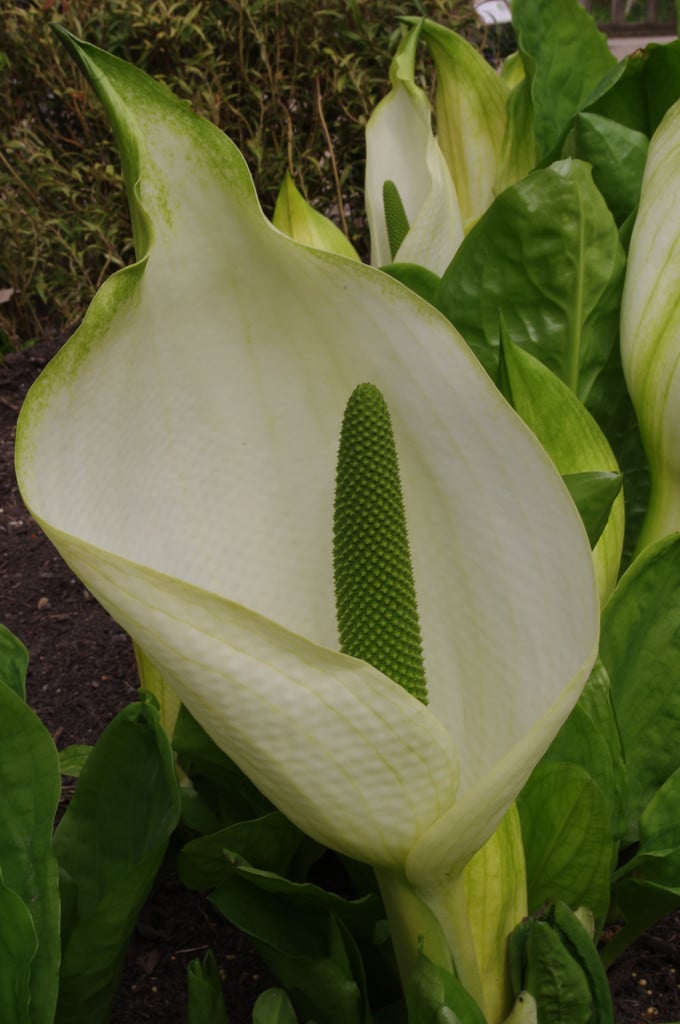
This plant is listed as an invasive non-native species in the UK – see Cultivation section for details A herbaceous perennial with musky, arum-like flowers in spring, before the leaves, comprising an upright green spadix surrounded by a cream, green-tipped spathe. The large, glossy, oblong leaves, produced in a basal cluster, can reach 1.2m tall. A hybrid between L. americanus and L. camtschatcensis which does not set seed

Position

Full sun, Partial shade

Soil Types

Loam

Max Height

0.5-1 metres

Max Spread

0.1-0.5 metres

Size

Time to Maturity
2–5 years
Max Spread
0.1-0.5 metres
Max Height
0.5-1 metres

Growing Conditions

Loam
Moisture
Poorly–drained
pH
Acid or Alkaline or Neutral

Position

Full sun Partial shade
Aspect
West–facing or South–facing or East–facing
Exposure
Exposed or Sheltered
Hardiness
H7

Colour & Scent

Fragrance Flower
Season Stem Flower Foliage Fruit
Spring
Summer
Autumn
Winter

Botanical Details

Family
Araceae
Native to GB/Ireland
No
Foliage
Deciduous
Habit
Clump forming
Potentially harmful
Harmful if eatenskin/eye irritant. Wear gloves and other protective equipment when handling Pets: harmful if eatenskin/eye irritant - see the HTA guide to potentially harmful plants for further information and useful contact numbers
Genus
Lysichiton are rhizomatous herbaceous perennials with large, lance-shaped leaves developing after the ovate white or yellow flower spathes surrounding the club-like, yellow or green flowering spadix
Name Status
Correct

How to Grow

Cultivation

This plant is listed on Schedule 9 of the UK Wildlife & Countryside Act as an invasive non-native species. Across the EU, UK and NI it is an offence to plant or cause to grow in the wild plants listed on Schedule 9 of this order. These plants should not be planted or caused to grow in the wild and in addition are banned from sale. Gardeners possessing them should undertake measures to control them. See RHS advice on invasive non-native species for further information

Propagation

Please see cultivation notes

Suggested planting locations and garden types

  • Architectural
  • Low Maintenance

Pests

See cultivation notes

Diseases

See cultivation notes