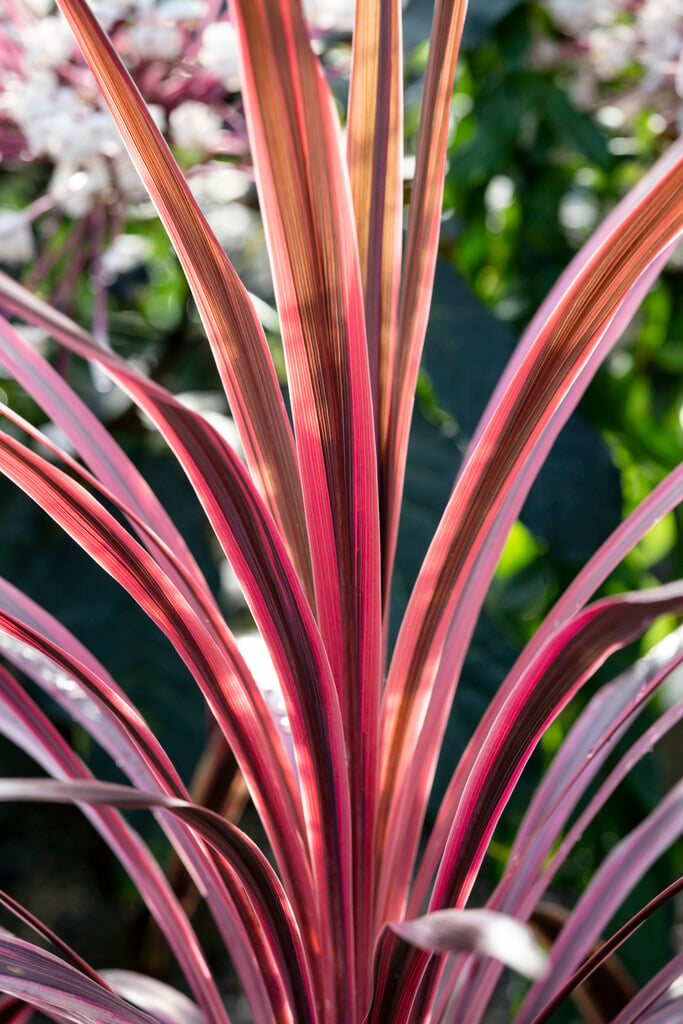
Cordyline 'Cherry Sensation' (v)

RHS Plant Profile
cabbage palm 'Cherry Sensation'

Synonyms

Cordyline australis 'Cherry Sensation'

Shrubs Trees

An upright, palm-like shrub or small tree, to around 3m high in good conditions, with upright to arching, lance-shaped leaves held at the tips of the branches. Leaves are deep pink with dark reddish-purple centres. In late spring and early summer, mature plants produce a mass of tiny, fragrant, creamy-white flowers

Position

Full sun, Partial shade

Soil Types

Chalk, Clay, Loam, Sand

Max Height

2.5-4 metres

Max Spread

1-1.5 metres

Size

Time to Maturity
5–10 years
Max Spread
1-1.5 metres
Max Height
2.5-4 metres

Growing Conditions

Chalk Clay Loam Sand
Moisture
Moist but well–drained or Well–drained
pH
Acid or Alkaline or Neutral

Position

Full sun Partial shade
Aspect
East–facing or South–facing or West–facing
Exposure
Sheltered
Hardiness
H3
Drought Resistance
Yes

Colour & Scent

Fragrance Flower
Season Stem Flower Foliage Fruit
Spring
Summer
Autumn
Winter

Botanical Details

Family
Asparagaceae
Native to GB/Ireland
No
Foliage
Evergreen
Habit
Columnar upright
Genus
Cordyline are palm-like evergreen shrubs or tree-like perennials, with rosettes or tufts of linear or anrrowly lance-shaped, leathery leaves, and terminal panicles of fragrant, cup-shaped flowers followed by small. spherical berries
Name Status
Unresolved

How to Grow

Cultivation

Grow in fertile, well-drained soil in full sun to partial shade. May need winter protection in cold areas. See cordyline cultivation for further information

Propagation

Propagate by stem cuttings or by removing and re-potting well-rooted offsets in spring

Suggested planting locations and garden types

  • Architectural
  • City and courtyard gardens
  • Coastal
  • Patio and container plants
  • Sub-tropical
  • Houseplants
  • Low Maintenance
  • Conservatory and greenhouse

Pruning

No pruning required

Pests

May be susceptible to mealybugs, scale insects and red spider mites when grown under glass

Diseases

May be susceptible to cordyline slime flux and honey fungus (rarely)