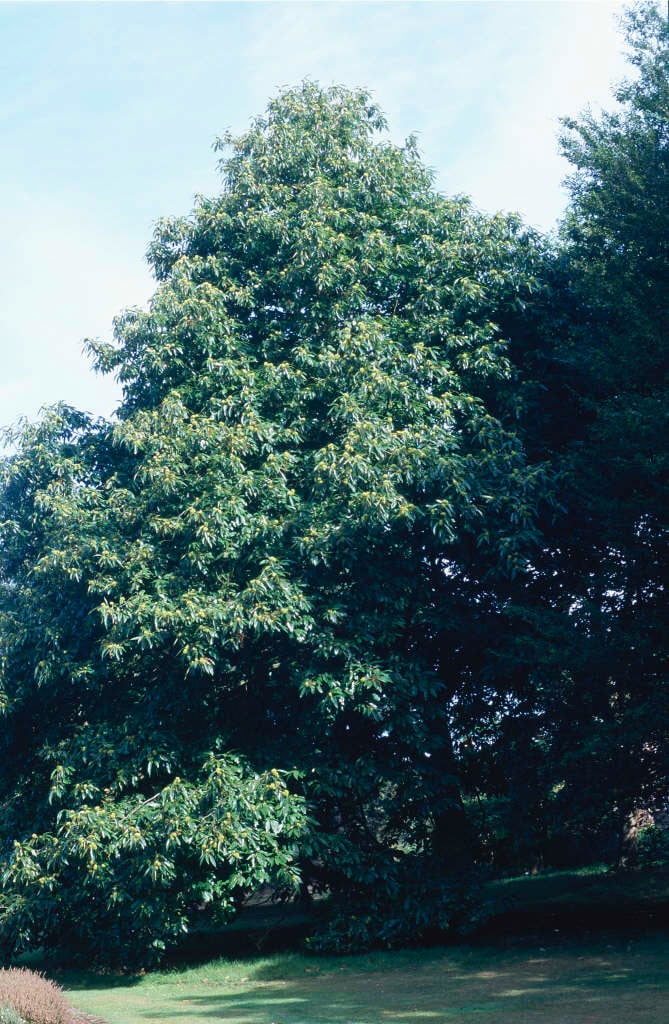
Castanea sativa

RHS Plant Profile
sweet chestnut
sweet chestnut RHS 2002

Other common names

common chestnut, Eurasian chestnut, European chestnut, Sardian nut, Spanish chestnut, castanwydden

Synonyms

Castanea vesca
Castanea vulgaris

Trees

A large vigorous deciduous tree with rugged, grooved bark and glossy, serrate, oblong-lanceolate leaves to 20cm in length. Male catkins to 15cm in length, yellowish, followed by spiny fruits containing edible nuts

Position

Full sun

Soil Types

Loam, Sand

Max Height

Higher than 12 metres

Max Spread

wider than 8 metres

Size

Time to Maturity
20–50 years
Max Spread
wider than 8 metres
Max Height
Higher than 12 metres

Growing Conditions

Loam Sand
Moisture
Well–drained
pH
Acid or Neutral

Position

Full sun
Aspect
South–facing or North–facing or West–facing or East–facing
Exposure
Exposed or Sheltered
Hardiness
H6
Drought Resistance
Yes

Colour & Scent

Season Stem Flower Foliage Fruit
Spring
Summer
Autumn
Winter

Botanical Details

Family
Fagaceae
Native to GB/Ireland
Yes
Foliage
Deciduous
Habit
Spreading branched
Genus
Castanea are fast-growing and large deciduous trees or large shrubs, with long, toothed leaves and conspicuous yellow catkins followed by spiny fruits
Name Status
Correct
Plant Range
S. Europe, N. America, SW Asia, N. Africa

How to Grow

Cultivation

Grow in well-drained soil in full sun

Propagation

Propagate by seed or grafting

Suggested planting locations and garden types

  • Architectural

Pruning

Pruning group 1

Pests

Generally pest-free

Diseases

May be susceptible to phytophthora, leaf spot, chestnut blight and honey fungus