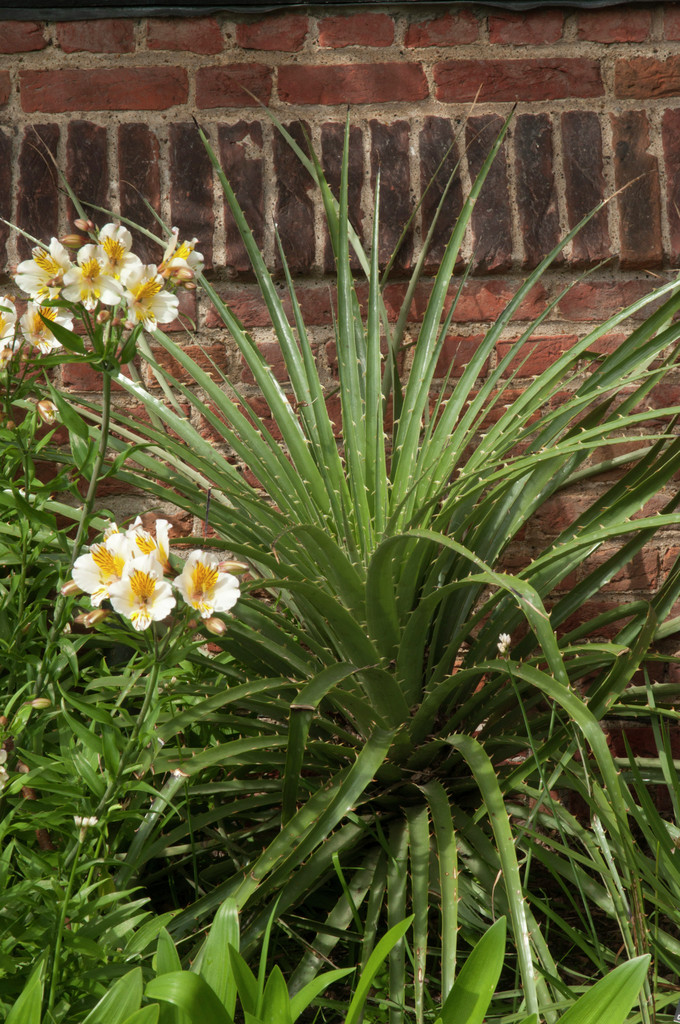
Hesperoyucca whipplei

RHS Plant Profile
Our Lord's candle
Our Lord's candle RHS

Other common names

Chaparral yucca, Spanish bayonet

Synonyms

Yucca whipplei subsp. parishii
Yucca whipplei subsp. whipplei
Yucca whipplei subsp. percursa
Yucca peninsularis
Yucca whipplei
Yucca whipplei subsp. intermedia
Yucca whipplei subsp. eremica
Yucca whipplei subsp. caespitosa

Shrubs

produces a dense, dome-shaped rosette of narrow, spine-tipped, grey-blue, evergreen leaves, to about 1m. Mature plants produce massive flower spikes, potentially to 5m though usually less in gardens. These comprise a stout stem with masses of scented, hanging, bell-shaped, ivory flowers in late summer. Flowers and stem may be flushed with reddish-purple

Position

Full sun

Soil Types

Chalk, Loam, Sand

Max Height

0.5-1 metres

Max Spread

0.5-1 metres

Size

Time to Maturity
5–10 years
Max Spread
0.5-1 metres
Max Height
0.5-1 metres

Growing Conditions

Chalk Loam Sand
Moisture
Well–drained
pH
Acid or Alkaline or Neutral

Position

Full sun
Aspect
West–facing or South–facing
Exposure
Exposed or Sheltered
Hardiness
H4

Colour & Scent

Fragrance Flower
Season Stem Flower Foliage Fruit
Spring
Summer
Autumn
Winter

Botanical Details

Family
Asparagaceae
Native to GB/Ireland
No
Foliage
Evergreen
Habit
Tufted
Genus
Name Status
Correct
Plant Range
California to Mexico

How to Grow

Cultivation

Grow outdoors in any well-drained soil in full sun. See yucca cultivation for further advice. See yucca cultivation for further advice

Propagation

Propagate by seed or remove rooted suckers

Suggested planting locations and garden types

  • Architectural
  • City and courtyard gardens
  • Coastal
  • Cottage and informal garden
  • Mediterranean climate plants
  • Flower borders and beds

Pruning

No pruning required. The rosette dies after flowering, and should be carefully cut away, but is usually replaced by one or more offsets

Pests

May be susceptible to aphids on flower spikes

Diseases

May be susceptible to yucca leaf spot