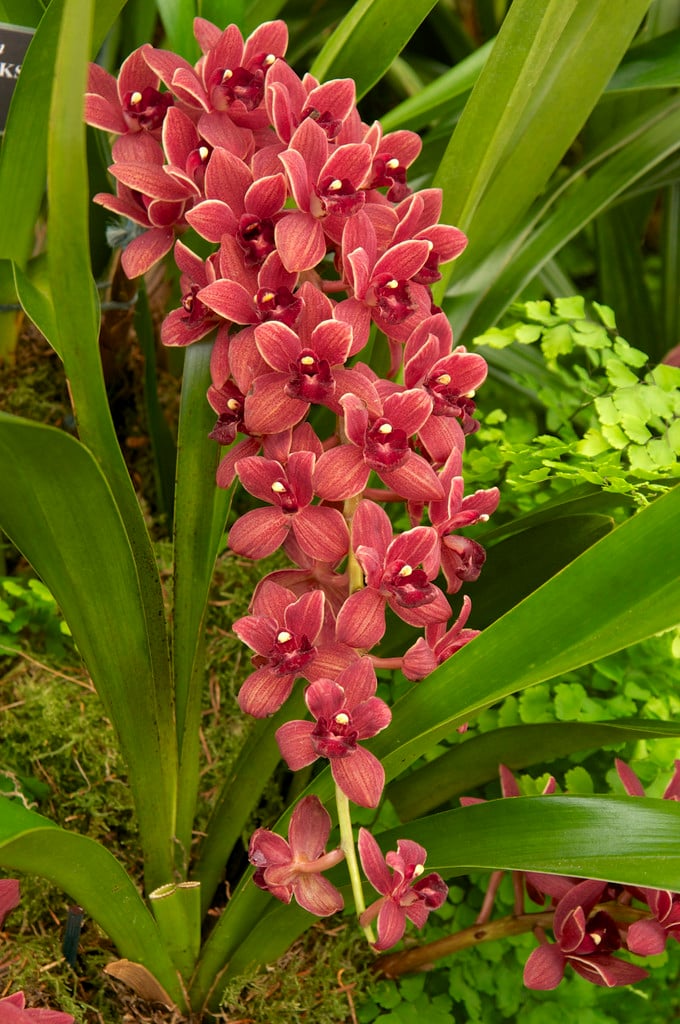
Cymbidium Dorothy Stockstill gx

RHS Plant Profile
boat orchid Dorothy Stockstill gx
boat orchid Dorothy Stockstill gx RHS
Award of Garden Merit
Conservatory Greenhouse

'Dorothy Stockstill' is a highly floriferous cymbidium producing pendent racemes of 25 or more small rich pinkish-brown flowers with a maroon lip produced from winter to spring

Position

Partial shade

Soil Types

Loam

Max Height

0.5-1 metres

Max Spread

0.5-1 metres

Size

Time to Maturity
2–5 years
Max Spread
0.5-1 metres
Max Height
0.5-1 metres

Growing Conditions

Loam
Moisture
Well–drained
pH
Neutral

Position

Partial shade
Aspect
West–facing or East–facing
Exposure
Sheltered
Hardiness
H1C

Colour & Scent

Season Stem Flower Foliage Fruit
Spring
Summer
Autumn
Winter

Botanical Details

Family
Orchidaceae
Native to GB/Ireland
No
Foliage
Evergreen
Habit
Clump forming
Potentially harmful
Skin allergen. Wear gloves and other protective equipment when handling
Genus
Cymbidium are epiphytic, lithophytic or terrestrial orchids with prominent spherical to ovoid pseudobulbs, long linear leaves and fleshy white roots. Several long lasting showy flowers with a distinctive 3-lobed lip are borne on erect or arching flower spikes from the bases of the pseudobulbs
Name Status
Accepted

How to Grow

Cultivation

Requires day temperatures around 16°C and 10°C at night. Provide good light levels, but avoid direct sunlight. Pot firmly into epiphytic or terrestrial orchid compost, water thoroughly when compost is almost dry, allow to drain and use orchid fertiliser at every third watering. Water sparingly in winter. Place outside in dappled shade during the summer months to aid flower initiation. This cymbidium hybrid is often grown in a basket because of the pendulous nature of the flower spikes. See cymbidium cultivation

Propagation

Propagate by division of pseudobulbs after flowering, in early or mid spring when pot-bound

Suggested planting locations and garden types

  • Patio and container plants
  • Houseplants
  • Conservatory and greenhouse

Pruning

No pruning required, cut down flowered stems to base

Pests

May be susceptible to aphids, glasshouse red spider mite, scale insects and mealybugs

Diseases

Generally disease-free. Sterilising cutting tools may prevent virus diseases, such as Cymbidium Mosaic Virus (CMV).