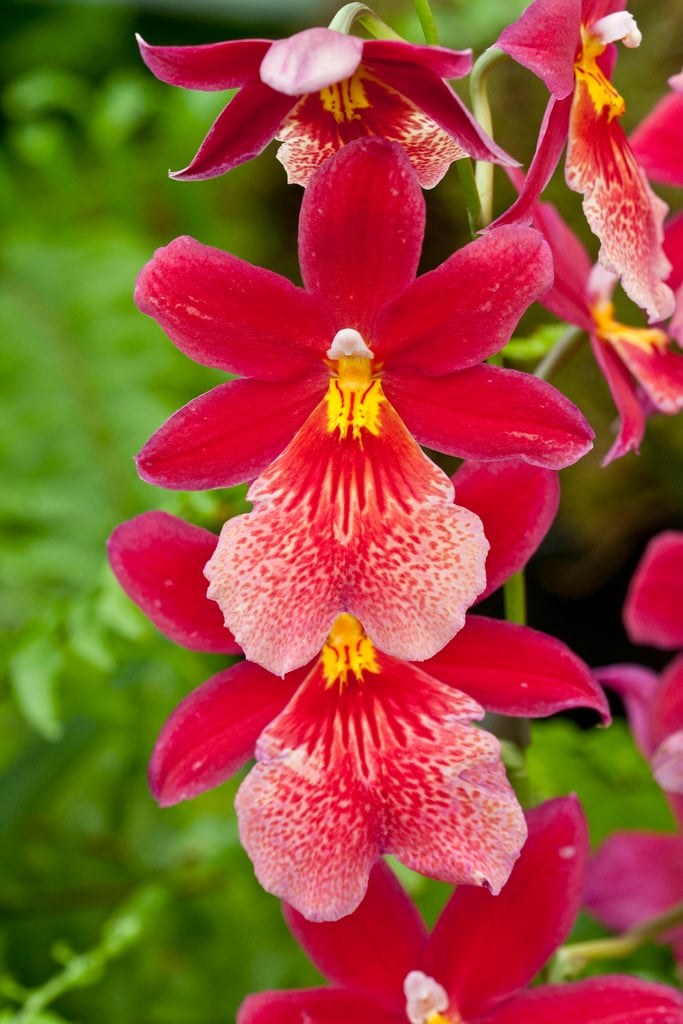
× Oncidopsis Nelly Isler gx

× <em>Oncidopsis</em> Nelly Isler gx RHS

Synonyms

× Burrageara Nelly Isler gx

Award of Garden Merit
Houseplants Conservatory Greenhouse

Nelly Isler gx AGM is a vigorous, free-flowering epiphytic orchid to 25cm tall with ovoid pseudobulbs, each with 2-3 leaves to 20cm long. It bears spikes of fragrant, long-lasting, bright carmine-red flowers with a striking yellow blotch in the centre of the flower, the lip is a light pink colour with bold waterfall markings and attractive carmine spots and blotches; flowers can appear at any time of year and will last for a number of weeks

Position

Partial shade

Max Height

0.1-0.5 metres

Max Spread

0.1-0.5 metres

Size

Time to Maturity
2–5 years
Max Spread
0.1-0.5 metres
Max Height
0.1-0.5 metres

Growing Conditions

Moisture
Well–drained
pH

Position

Partial shade
Aspect
North–facing or West–facing or East–facing
Exposure
Sheltered
Hardiness
H1A

Colour & Scent

Season Stem Flower Foliage Fruit
Spring
Summer
Autumn
Winter

Botanical Details

Family
Orchidaceae
Native to GB/Ireland
No
Foliage
Evergreen
Habit
Columnar upright
Genus
× Oncidopsis is a hybrid genus between Oncidium and Miltonopsis epiphytic orchids. 2-3 leathery leaves are borne by each ovoid pseudobulb which form large clumps when mature. White pink or red flowers are born in arching racemes from the bases of the pseudobulbs
Name Status
Accepted

How to Grow

Cultivation

Grow in epiphytic orchid compost , provide bright filtered light, good ventilation and in spring and summer water freely as compost dries out, use half strength orchid fertiliser at every third watering and mist daily for high humidity. Reduce watering in winter and allow a 4 week period of day time temperature around 10°C to encourage flowering. Re-pot every 2-3 years as the new growths are emerging from the base of the pseudobulbs before flowering

Propagation

Propagate by division when plants are large enough to be divided into clumps of 2 - 3 pseudobulbs

Suggested planting locations and garden types

  • Patio and container plants
  • Conservatory and greenhouse

Pruning

No pruning required, remove spent flower spikes

Pests

May be susceptible to aphids, glasshouse red spider mite and mealybugs

Diseases

Generally disease-free