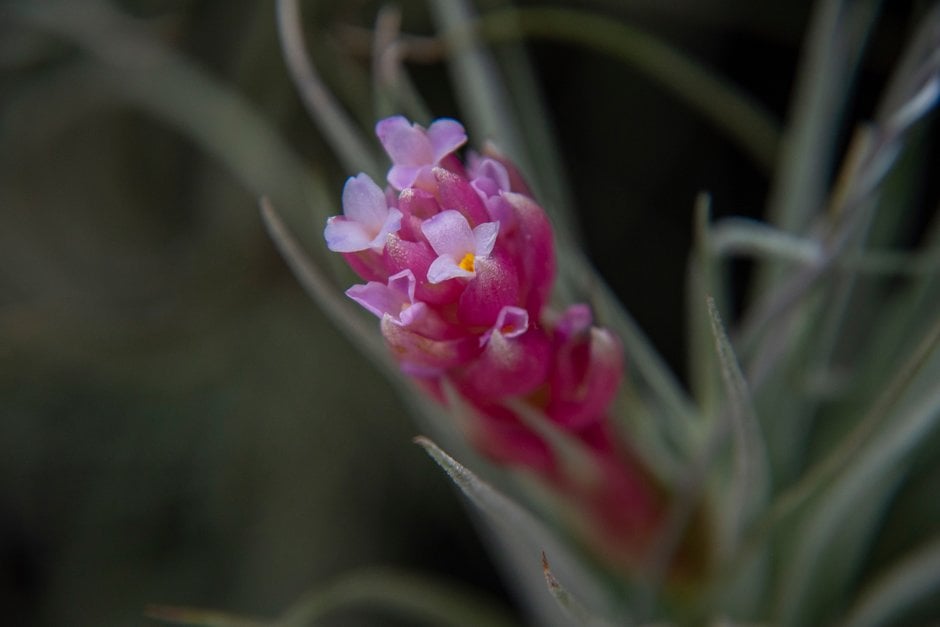
Tillandsia 'Cotton Candy'

RHS Plant Profile
air plant 'Cotton Candy'
air plant 'Cotton Candy' RHS
Conservatory Greenhouse Houseplants

An evergreen epiphyte forming a rosette of long, thin, silvery-green leaves, to around 15cm in diameter. Spikes of lilac-violet flowers emerge from rose-pink bracts just above the foliage

Position

Partial shade

Max Height

0.1-0.5 metres

Max Spread

0.1-0.5 metres

Size

Time to Maturity
5–10 years
Max Spread
0.1-0.5 metres
Max Height
0.1-0.5 metres

Growing Conditions

Moisture
Well–drained
pH
Neutral

Position

Partial shade
Aspect
East–facing or West–facing
Exposure
Sheltered
Hardiness
H1C

Colour & Scent

Season Stem Flower Foliage Fruit
Spring
Summer
Autumn
Winter

Botanical Details

Family
Bromeliaceae
Native to GB/Ireland
No
Foliage
Evergreen
Habit
Clump forming
Genus
Tillandsia are evergreen perennials, often epiphytic, forming rosettes of leathery, linear or strap-shaped leaves, and tubular or funnel-shaped flowers which may be 2-ranked in spikes with conspicuous bracts, or solitary and inconspicuous
Name Status
Accepted

How to Grow

Cultivation

Plants need no compost, they are glued or wired to a support. Grow under glass in bright but diffused light with good ventilation. From spring to autumn immerse in water twice a week (more in hot, dry conditions), drain well and allow to dry. Can stand outdoors in summer to benefit from rain, and increased light and humidity. See Air plants

Propagation

Propagate from seed (see Air plants) or by separating once they are at least a third the size of the parent

Suggested planting locations and garden types

  • Patio and container plants
  • Sub-tropical

Pruning

Remove offsets that have died after flowering

Pests

May be susceptible to aphids and mealybugs

Diseases

Generally disease-free