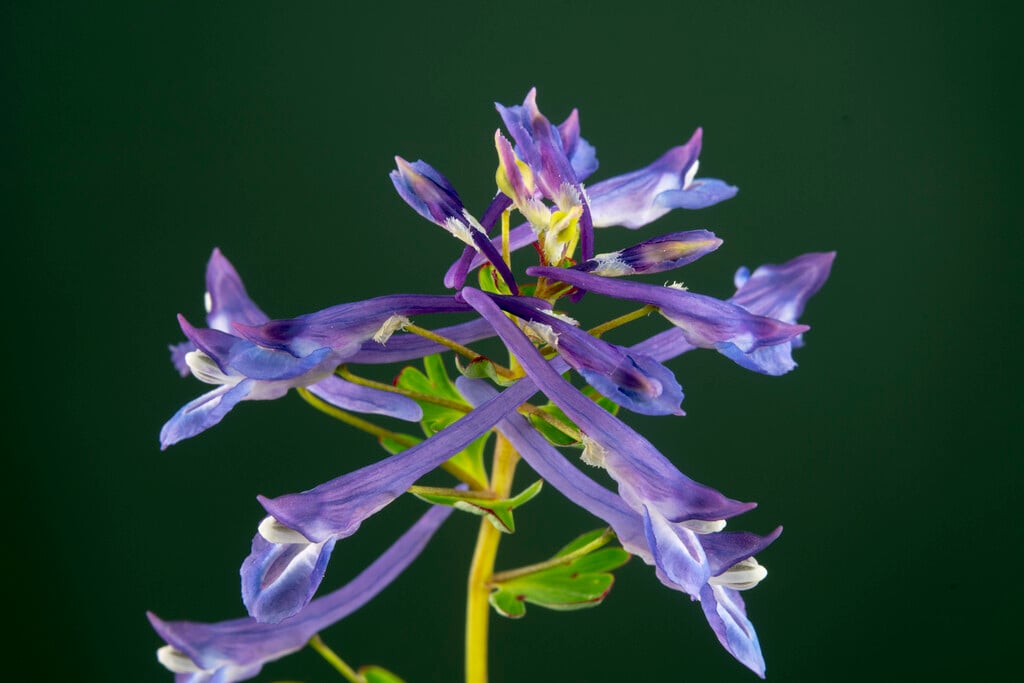
Corydalis omeiana

Award of Garden Merit
Herbaceous Perennial

An upright perennial found in dappled shade woodland settings, has light-toned green leaves grouped into two or three ovate and loabed leaflets that form a mat of fern-like foliage. Its tubular blue-purple flowers are held in dense racemes, flowering from late spring through to late summer when it can go dormant.

Position

Partial shade

Soil Types

Loam, Sand, Chalk, Clay

Max Height

0.1-0.5 metres

Max Spread

0.1-0.5 metres

Size

Time to Maturity
2–5 years
Max Spread
0.1-0.5 metres
Max Height
0.1-0.5 metres

Growing Conditions

Loam Sand Chalk Clay
Moisture
Moist but well–drained
pH
Acid or Alkaline or Neutral

Position

Partial shade
Aspect
West–facing or East–facing or North–facing
Exposure
Sheltered
Hardiness
H5

Colour & Scent

Season Stem Flower Foliage Fruit
Spring
Summer
Autumn
Winter

Botanical Details

Family
Papaveraceae
Native to GB/Ireland
No
Foliage
Deciduous
Habit
Columnar upright
Genus
Corydalis can be annuals, biennials or tuberous or rhizomatous perennials, with ternately or pinnately lobed leaves and racemes of spurred, tubular flowers
Name Status
Correct

How to Grow

Cultivation

Will grow well in humous-rich, fertile, well-drained soil in partial shade, preferably in woodland settings.

Propagation

Propagate by seed or by division

Suggested planting locations and garden types

  • City and courtyard gardens
  • Cottage and informal garden
  • Patio and container plants
  • Flower borders and beds

Pruning

No pruning required

Pests

May be susceptible to slugs and snails

Diseases

Generally disease-free