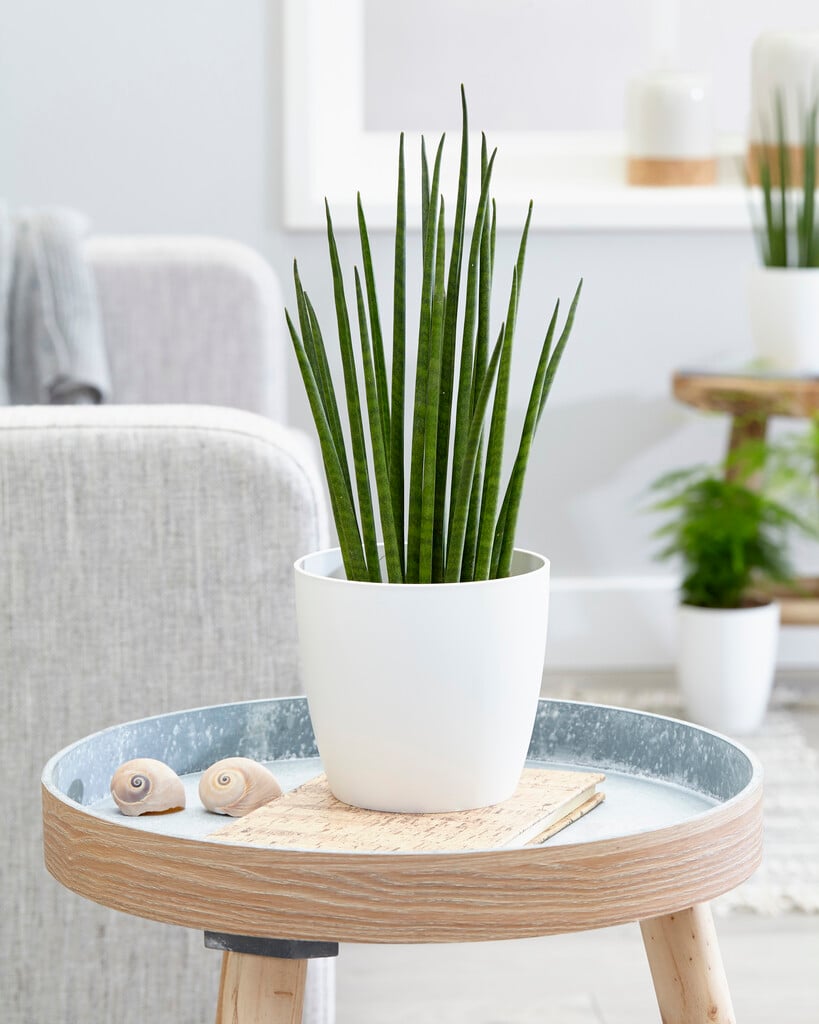
Sansevieria bacularis 'Mikado'

<em>Sansevieria</em> <em>bacularis</em> 'Mikado' visionspictures.com
Houseplants

An erect, rhizomatous perennial to 50cm tall, with stiff, fleshy leaves, tapering to a point. Each leaf bears mottled, light green bands

Position

Full shade, Full sun, Partial shade

Soil Types

Loam, Sand

Max Height

0.1-0.5 metres

Max Spread

0.1-0.5 metres

Size

Time to Maturity
2–5 years
Max Spread
0.1-0.5 metres
Max Height
0.1-0.5 metres

Growing Conditions

Loam Sand
Moisture
Well–drained
pH
Acid or Alkaline or Neutral

Position

Full shade Full sun Partial shade
Aspect
East–facing or North–facing or South–facing or West–facing
Exposure
Sheltered
Hardiness
H1B

Colour & Scent

Season Stem Flower Foliage Fruit
Spring
Summer
Autumn
Winter

Botanical Details

Family
Asparagaceae
Native to GB/Ireland
No
Foliage
Evergreen
Habit
Tufted
Potentially harmful
Harmful if eaten. Wear gloves and other protective equipment when handling
Genus
Sansevieria are stemless, erect, rhizomatous, succulent perennials with evergreen, ovate or strap-shaped, leathery leaves often attractively marbled, and short spikes of small fragrant tubular greenish-white flowers
Name Status
Unresolved

How to Grow

Cultivation

Grow in 3 parts peat-free, loam-based potting compost and 1 part grit. Although tolerant of deep shade, growth is best in bright filtered or indirect light. When in growth, water moderately and apply a half-strength balanced liquid fertiliser monthly; water sparingly in winter. Pot on only when pot-bound. Leaf growth may stop if leaf tips are damaged. See Sansevieria and houseplant cultivation for further advice

Propagation

Propagate by removing suckers or dividing in spring. Root leaf sections with bottom heat from spring to autumn

Suggested planting locations and garden types

  • Houseplants
  • Low Maintenance
  • Conservatory and greenhouse

Pruning

No pruning required

Pests

Generally pest-free

Diseases

Generally disease-free